Find a Showroom

Should Curtains Touch the Floor?
Wondering if curtains should touch the floor? In general, yes, it’s best for curtains and drapes to touch the floor, either by kissing the floor or floating just above it. The effect of long, floor-length curtains is a luxurious look that accentuates the height of your window and ceiling. Plus, it makes the drapery look tailored and curated specifically for your space.
However, when it comes to how exactly your curtains touch the floor, there are a few different options. Finding the right length for your space can be transformative for the room’s overall aesthetic while giving you the functionality you need.
Main Lengths for Drapery
When thinking about curtain length styles and deciding how curtains should touch the floor, there are three main lengths for drapery to choose from: float length, break length, and puddle length.
Float Length
The drapery hovers above the floor.
Break Length
The drapery kisses the floor.
Puddle Length
The drapery puddles on the floor.
Choosing the curtain length for your space depends on:
- Aesthetic preferences – Curtain length can give you different aesthetics, from a crisp modern look with float-length drapery to a luxurious, opulent look with puddle drapery.
- Functionality – If you plan to regularly open and close your drape panels, float or break length is best, as the drapery will either hover or just graze the floor.
- Fabric – Certain fabrics can stretch or shrink over time, so it’s best to choose a length that’s mindful of your fabric’s behavior. For example, linen and wool curtains are more likely to relax and stretch over time, so these types of fabric curtains should be cut slightly shorter.
Examples of Curtain Lengths and Styles
See examples of each type of curtain length to learn more about popular design choices and how to choose the best curtain length for your space.
Float Length

Float length means your curtains hang just above the floor, for a simple, tailored look. If you’re wondering how high should curtains be off the floor, float-length drapery should sit no more than ½- to 1-inch above the surface. Any any higher and your curtains may look like they were ordered too short.
How to Measure for Float-Length Drapery: Measure from the curtain rod down the floor and subtract ½ or ¼ of an inch.
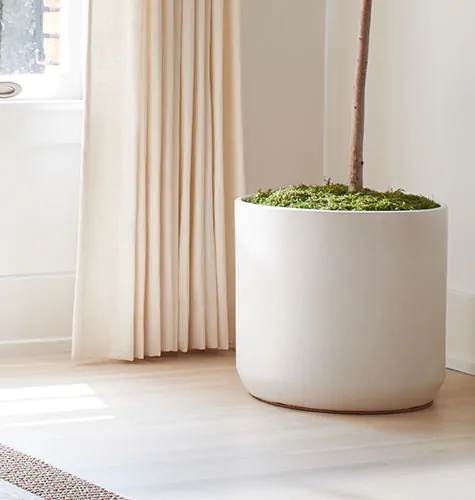
When to Choose Float-Length Drapery
Floating drapery is ideal for:
- A crisp, clean, modern look.
- Newer homes with relatively level floors as the clean line of drapery will accentuate the level floor.
- Easy functionality as the panels won’t graze the floor.
- Casual and formal rooms including bedrooms, kitchens, dining and living rooms.
- Curtains for nurseries and kids’ rooms so there’s no excess fabric that can be played with or sat upon.
- Pristine fabrics that are unlikely to stretch or shrink, like Sunbrella fabrics.
When Not to Choose Float-Length Drapery
A float length isn’t always ideal, and the following situations will warrant a longer curtain length:
- Older homes with uneven floors, as the clean line of the drapery will accentuate the unevenness of your floors.
- If you’ve chosen natural fabrics, like silk, linen, and wool, your drapes may shrink or stretch over time. If the fabric shrinks, the drapes could end up looking too short and unsophisticated. If it stretches, it may not stretch evenly across the bottom, making the drapes look ill-tailored. For natural fabrics, it’s typically best to choose break or puddle length to avoid these potential aesthetic issues.
Break Length

Break length refers to drapery that kisses the floor, or gently trails along it. If you’re asking do curtains have to touch the floor, break length is the most universally flattering answer: just 1 to 2 inches of excess fabric creates an intentionally elongated look without excessive puddling.
How to Measure for Break-Length Drapery: Measure from the curtain rod down the floor and add 1 to 2 inches.
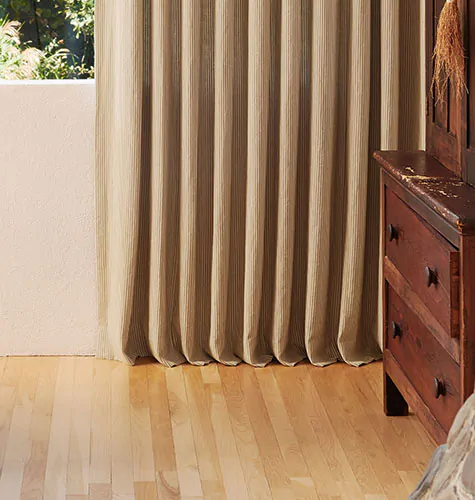
When to Choose Break-Length Drapery
Break-length drapery is ideal for:
- An elegant, elongated look with a touch of luxury.
- Homes with uneven floors, as the longer curtain length helps to disguise the unevenness.
- Easy functionality, as long as you don’t mind the fabric grazing the floor.
- Casual and formal rooms like bedrooms, kitchens, dining and living rooms.
- Natural fabrics, like silk, linen, wool and cotton that are prone to stretching or shrinking in different conditions.
When Not to Choose Break-Length Drapery
Break length is the most versatile of the curtain lengths, but there are a few situations where it isn’t the right fit:
- Along any older floor or baseboard with splinters or protruding nails that the drapery might catch and snag on. For those wondering should curtains touch the floor or baseboard, a break length along an older baseboard with damage is one situation where float may serve you better.
- Drapery that sits behind furniture as the attractive break won’t be visible and might cause the fabric to catch on the legs.
Puddle Length
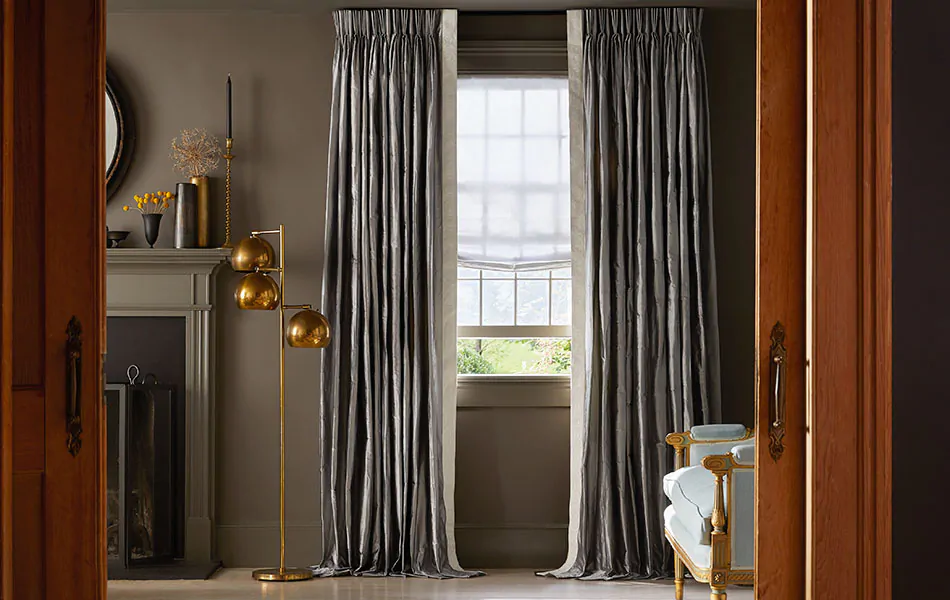
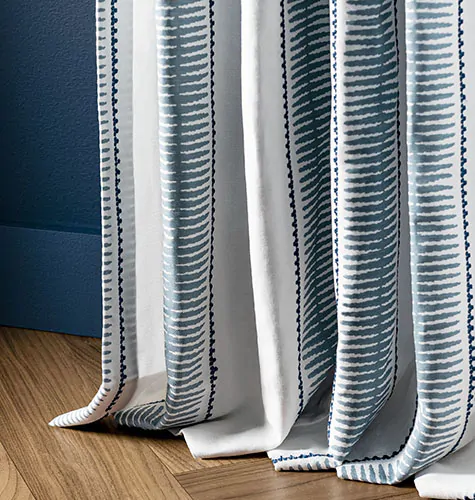
Just as the name suggests, puddle-length drapery features excess fabric that puddles on the floor. The result is an opulent, luxurious look ideal for formal dining and living rooms. For those asking should curtains drag on the floor, puddle length is an intentional exception, where trailing fabric becomes a deliberate design statement.
How to Measure for Puddle-Length Drapery: Measure from the curtain rod down the floor and add 3 to 6 inches.
When to Choose Puddle-Length Drapery
Puddling drapery is ideal for:
- An opulent, lavish look.
- Homes with uneven floors as the puddling helps to disguise the unevenness.
- Stationary, decorative applications since the long fabric makes it more difficult to adjust the panels regularly.
- Formal rooms like dining rooms and living rooms.
- Thick, luxurious fabrics, like silk, wool, heavy linens and velvet which help to make the puddling lusher and fuller.
When Not to Choose Puddle-Length Drapery
Puddle-length drapery is not as versatile as the shorter curtain lengths and may not be appropriate for the following applications:
- Curtains for kids’ rooms and homes with pets, as the excess fabric can be easily sat upon, trampled and torn.
- Drapery for active rooms like kitchens, game rooms and sunrooms.
- Functional spaces where you’ll need to adjust the drapery frequently for privacy and light control like bedrooms, media rooms and casual living rooms.
- If you’ve chosen linen or wool, which can relax and stretch with gravity, a longer puddle-length curtain may become even longer over time, losing its tailored look. For these fabrics, break length or a shorter puddle length is often a better option.
Choosing the Right Curtain Length for Your Space
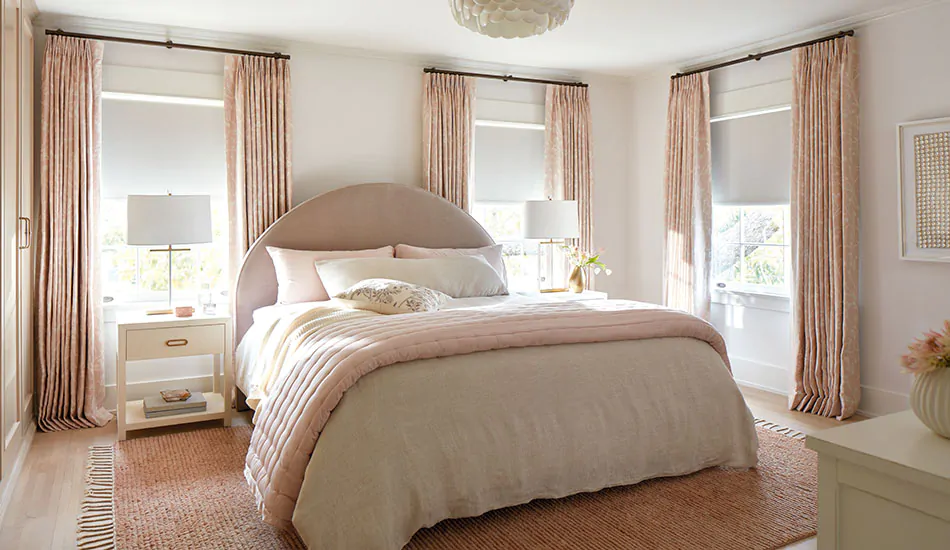
When deciding if curtains should touch the floor, break or puddle, there are several factors to consider in this curtain height guide.
- Type of room & activity levels – The type of room you’re installing your curtains in and how busy or active the space is both play big roles in which curtain length is best. In general, more casual, active rooms like kitchens and bedrooms benefit from a shorter length (float or break), while formal, less active rooms like dining rooms can be elevated further with luxurious puddle drapery.
- Light control & privacy – For the best light control, choose break or puddle-length drapery, which helps block more light at floor level for a more complete room-darkening effect. For stronger light blocking, consider combining other blackout window treatments like blinds and shades. You can also learn how to layer curtains effectively to improve light control and privacy.
- Insulation – For the best insulated curtains, choose break or puddle-length drapery, which helps reduce air seepage at floor level and creates fuller window coverage. If insulation is a priority, be sure to choose drapery lining for your curtain panels. Learn more in our guides on curtains that keep heat out and thermal curtains.
- Everyday functionality – If you know you’ll be opening and closing your curtains on a regular basis, it’s best to choose float or break length, as puddling drapery will drag on the floor excessively.
- Fabric selection – Synthetic fabrics that are unlikely to shrink or stretch are best for float-length drapery; natural fibers that are prone to stretching and shrinking are best for break-length drapery; and luxurious thick fabrics, like velvet, silk and wool, are ideal for puddle-length drapery.
How to Measure for Curtain Length
Now that you know about each type of length and factors for choosing each one, it’s time to learn the best practices for measuring curtain length so you can get just the right look and functionality.
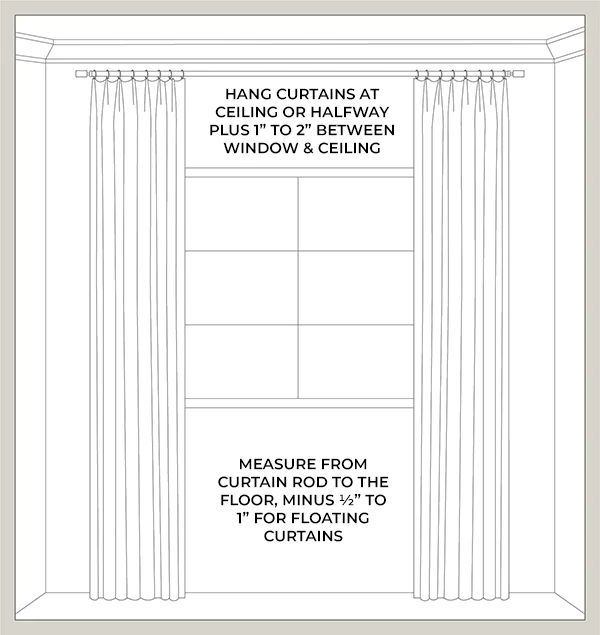
Before measuring for length, you need to decide how to position your curtain rod or track system. The best way to hang drapery is high and wide above your window, which helps to accentuate the height of your room and the size of your window. The curtain rod should sit a little more than halfway between your window frame and ceiling. Or, for very tall ceilings, position your rod about 8 to 10 inches above the window frame.
Once you have the right positioning for your curtain rod, you can measure for length. For a full walkthrough on placement, see our guide on how to hang curtains and how to install curtain rods.
How high should curtains be off the floor?
Measure the distance from where you want the rod or track system to be to the floor.
- For float-length drapery, measure from your rod to about ½ inch off the floor.
- For break-length drapes, measure from your rod to the floor and add 1 to 2 inches.
- For a puddle effect, measure from your rod to the floor and add 3 to 6 inches.
Knowing where curtains should fall starts with understanding how each of these curtain lengths behaves in your specific space, from the flooring material to the room’s foot traffic.
Get Personalized Design Advice for Curtain Length
With a thorough understanding of drapery length and how to choose the right one for your curtains, you’re ready to start turning your project vision into reality. Start by connecting with an expert Design Consultant who can answer your questions and help guide you toward the right drapery style, fabric and length.
You can schedule a consultation at a showroom where you can explore window treatment options in person or schedule a virtual consultation for convenience and ease. Either way, you’ll get the support you need to make the final selections that transform your interior.
You can also explore further inspiration in our guides to modern curtain ideas or living room curtain ideas before making your final selections.

GET THE GUIDANCE YOU NEED
Schedule a free design consultation with our talented Design Consultants for guidance on product choice, material selection and more.
FAQs About Curtain Length
Still deciding on curtain length? This series of FAQs recaps how long curtains should be, whether they should touch the floor, and how far off the floor they should hang.
How long should curtains be?
Based on your style preference, curtains should hang anywhere from about 1 inch above the floor to 6 inches onto the floor.
Should curtains touch the floor?
Yes, in most cases drapes look best when they touch or nearly touch the floor. The most common approach is a break length, where 1 to 2 inches of fabric gently grazes the floor for an elongated, elegant finish.
What is the standard curtain length?
There is no single standard curtain length, as the right measurements depend on your ceiling height, rod placement, and chosen length style.
Should living room curtains touch the floor?
Yes, in most cases living room curtains look best when they touch the floor.
What is the best curtain length?
Break length is often the best and most versatile curtain length for most rooms with 1 to 2 inches of fabric grazing the floor.
How far should curtains be from the floor?
If your curtains are not touching the floor, they should sit no more than 1/2 inch to 1 inch above it. Curtains hanging more than an inch above the floor can look too short rather than intentionally styled.