Find a Showroom
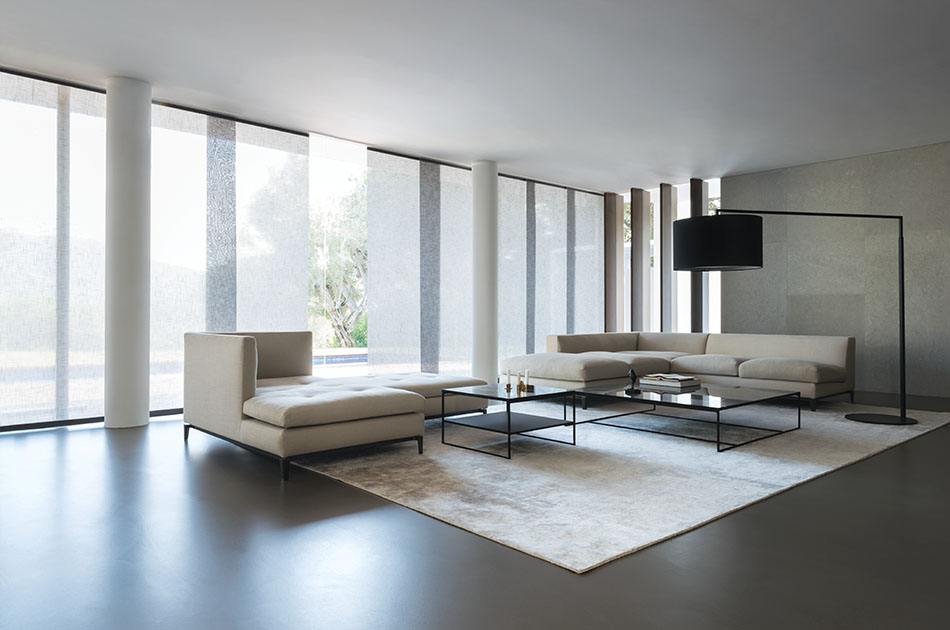
Panel Track Blinds for Sliding Glass Doors & Large Windows
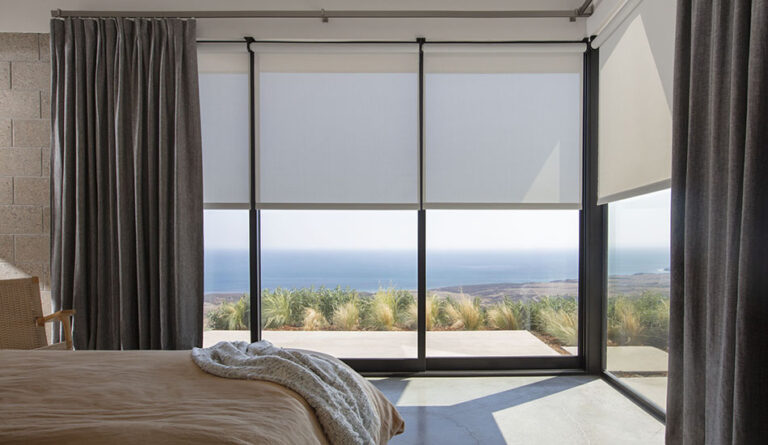
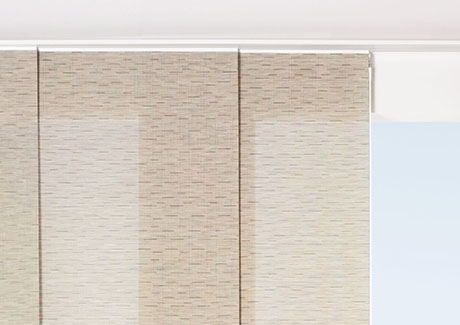
Panel Track Blinds are wide panels that hang from an overhead track and slide sideways to open and close. Also called Vertical Panel Track Blinds, panel track shades or sliding panel blinds, they are the standard modern choice for sliding glass doors, patio doors and wall-to-wall windows.
This guide explains what Panel Track Blinds are, when to choose them, the material and control options available and how to measure and install them yourself if you go the DIY route.
Key Takeaways: Panel Track Blinds
- Panel Track Blinds are flat, wide panels of material that slide along a track; they are not the same as the narrow rotating panels of Vertical Blinds.
- They are the standard modern window treatment for sliding glass doors, patio doors and wide window openings.
- Materials range from solid neutrals and natural woven textures to solar materials and Chilewich designer weaves.
- Two control options: a continuous cord loop or a hand-operated baton. Both are easy to use.
- You can order Panel Track Blinds to stack left, stack right or split-draw from the center depending on how you want the opening to look.
In this article: Panel Track Blinds
What Are Panel Track Blinds?
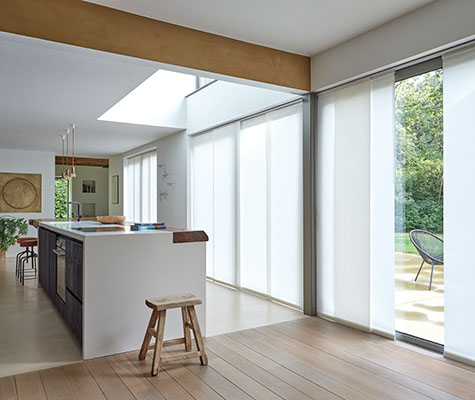
Panel Track Blinds are made up of flat panels of material (from two or four of them to more) that hang from a track at the top of the window. Instead of rotating open like slats, the panels slide sideways along two or three channels in the track and overlap slightly so no gaps show through when they are closed.
At The Shade Store, we refer to Panel Track Blinds as Vertical Blinds and vice-versa. Our Vertical Blinds collection only features the panel-style look, without rotating slats.
Vertical Panel Track Blinds vs Traditional Vertical Blinds
While Panel Track Blinds and Vertical Blinds are all the same product at The Shade Store, there are traditional Vertical Blinds that create a different look and experience. Our Vertical Blinds use wide, flat panels made of textured material that slide across the window for a clean, modern effect, while traditional Vertical Blinds have narrow vanes, often made of hard plastics, that rotate as well as slide on a track.
| Feature | Vertical Panel Track Blinds | Traditional Vertical Blinds |
| Panel style | Wide, flat panels, usually around 20-30 inches wide | Narrow rotating vanes, usually around 3.5 inches wide |
| Motion | Panels slide sideways along an overhead track | Vanes rotate open and closed, then slide to one side |
| Look | Clean, modern, gallery-like when closed | Traditional, more office-like |
| Best for | Sliding glass doors, patio doors, wide windows | Standard-width windows, sliding doors of modest width |
| Light control | Open or closed panel coverage | Adjustable via vane rotation |
Our Panel Track Blinds are a great choice when the opening is wide and you want a clean, modern look with hard textile panels that you can customize with their variety of colors, textures and patterns. Traditional rotating Vertical Blinds are often a plain, solid color and are better suited for offices or other industrial or functional spaces.
Benefits of Panel Track Blinds
Panel Track Blinds have several distinct benefits, including:
- Softening natural light in your room thanks to the light-filtering material options that range in colors, patterns and opacities.
- Providing privacy for peace of mind and a relaxing atmosphere.
- Available in a wide range of material options including solid neutral colors and subtle patterns to woven woods, solar materials and Chilewich designer styles.
- Delivers a sleek, modern aesthetic ideal for modern and contemporary homes, but versatile enough to suit transitional, mid-century modern and other similar styles.
- Offers space efficiency, thanks to their minimalist, unobtrusive design.
- Ideal window coverings large windows and sliding glass doors.
Designer Insight
For a sliding glass door that serves as a frequently used entrance, Panel Track Blinds are often the most practical choice. Their panels glide smoothly across the opening, making it easy to move in and out without anything getting in the way. Drapery is better suited to doors that are used less often, or to rooms that would benefit from the softness, texture, and architectural presence of fabric.
Material Types for Vertical Panel Track Blinds
All the materials for vertical Panel Track Blinds from The Shade Store are light filtering, with varying degrees of opacity for more or less light and privacy control. Learn about different material types, color options, textures and more.
Synthetic Materials
These synthetic materials come in both solid colors as well as patterns and textures so you can find the right look for your space.
Solid Colors
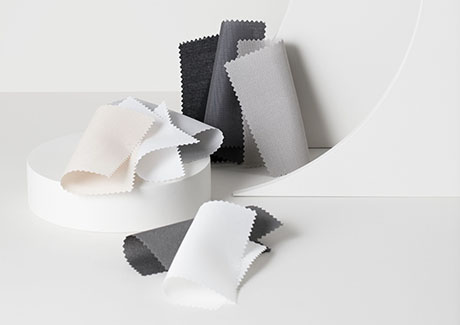
The solid colors primarily come in neutral tones like greys, tans, whites and black, but there are a few soft pastels if you’re looking for subtle color. Many of our solid colors are made from polyester or trevira, which is a type of polyester that is low pill, flame retardant and antimicrobial. Most solid-colored materials are OEKO-TEX® certified and a few are also GREENGUARD® certified, both of which speak to the minimal, or lack of, harmful chemicals in the material.
Patterns & Textures
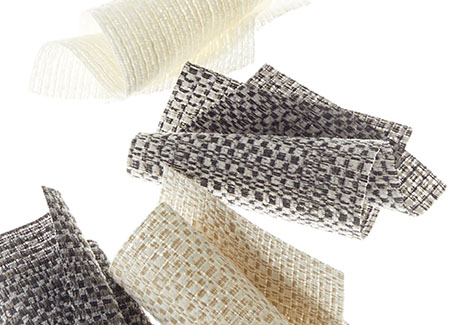
If you’re looking for a bit more visual interest in your Panel Track Blinds, patterned and textured materials are the way to go. Primarily available in neutral tones, patterns still give you lots of visual interest with soft floral designs, geometric patterns and a couple abstract looks. Textured materials add depth to your design with both visual and tactile textures, from subtle micro patterns to tweed-like designs inspired by fashion to couture-inspired stripes.
Natural Woven Materials
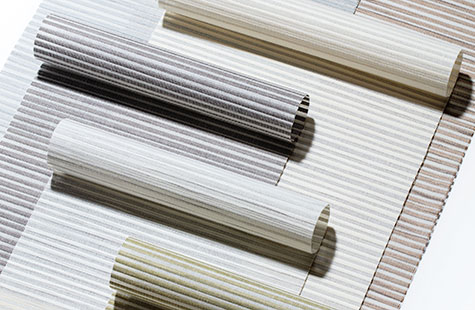
Natural woven materials give Panel Track Blinds an organic look. Made of natural fibers like paper and jute, mixed with synthetic fibers like polyester, these materials deliver an inviting organic texture look along with the durability and longevity of synthetic materials. All colors are nature-inspired and range from light, off-white hues to deeply saturated wood tones.
Solar Shade Materials
Solar materials are uniquely made to block up to 99% of UV rays while still letting natural light filter through for an inviting glow. Solar materials come in different transparency levels from 1% which blocks the most UV rays and offers the lowest transparency to up to 10% which blocks 90% of UV rays and offers the best transparency so you can still enjoy your outdoor view. Solar shade materials are available in neutral tones with varying textures, so you’ll find a look to suit your space.

Chilewich Designer Materials
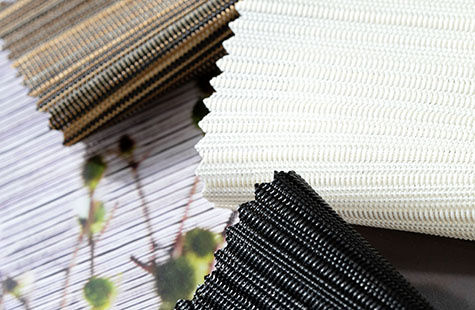
Chilewich options for Panel Track Blinds are all solar materials, most with a 7% or 10% transparency. These materials feature sophisticated designs and textures that are quintessentially Chilewich. Plus, all materials are both GreenGuard certified and Microban® certified. GreenGuard means there are minimal to no chemical emissions from the material while Microban certification speaks to the anti-microbial properties of the material.
How to Order Panel Track Blinds
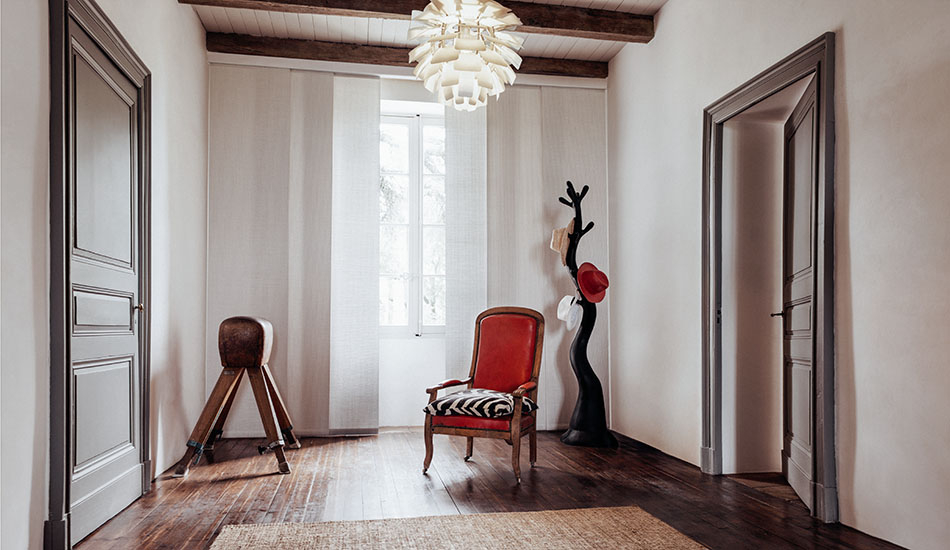
If you’re considering Panel Track Blinds for your home, learn how to order them to ensure they’re the right size and application for your space. This ordering process is particular to the custom Panel Track Blinds you’ll get from The Shade Store, but some steps, like measuring, will help you with any sliding panel blinds.
Step 1: Choose Your Mount Type
Mount type refers to how your track is hung over your windows or doors. Mount type will determine how you measure for your sliding panel blinds:
Inside Mount
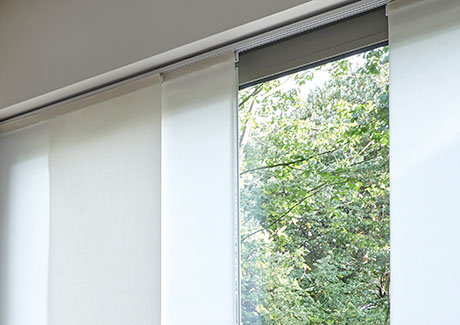
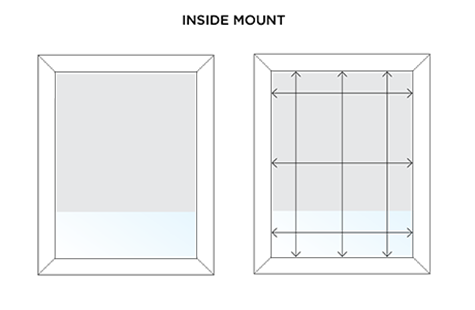
An inside-mount application means your blinds are installed inside the window frame, typically being secured to the top or “ceiling” of your window box. For an inside-mount application to be secure and work correctly, your window box needs to have a minimum depth of 1 ¼ inch.
Outside Mount
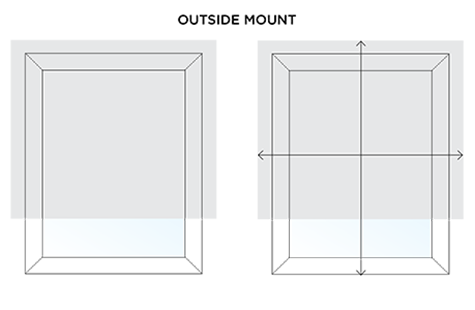
An outside-mount application refers to your blinds being installed on the wall or ceiling above your window frame for a taller and more dramatic appearance. There is no minimum depth requirement for a secure outside-mount application, so measuring for this application only requires a measurement for length and width.
Step 2: Measure for Your Ordering Length & Width
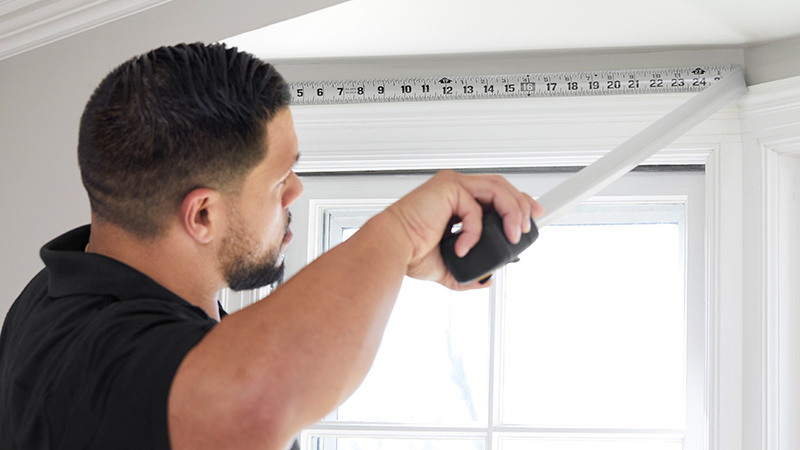
Measuring correctly is particularly important when you’re ordering custom Panel Track Blinds, as you’ll want to ensure they’re made to fit perfectly over your window. Learn how to measure for sliding panel blinds, based on your mount type.
measuring for inside mount
Measure for Width – Since windows are not perfectly square, take 3 different measurements across the top, middle and bottom of your window and round all measurements down to the nearest 1/8 inch. The smallest of the 3 measurements is your ordering width.
Measure for Length – Take 3 different measurements across the left, center and right of your window and round all measurements up to the nearest 1/8 inch. The largest of the 3 measurements is your ordering length.
measuring for outside mount
Measure for Width – Measure the width of the area you wish to cover. If space allows, we recommend adding another 1 to 1 ½ inches to each side (2 to 3 inches total) to help eliminate light seepage.
Measure for Length – Measure the height of the area you wish to cover, from either the ceiling to the floor or from the wall above your window to the floor.
Step 3: Choose Your Control Type
Control type refers to how you’ll adjust your sliding panel blinds back and forth on their track. There are two options for your control type and both are very easy to use:
Continuous Loop
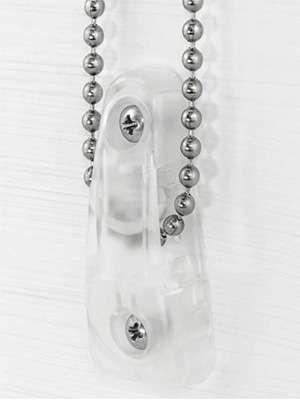
Continuous loop control allows you to adjust your blinds by pulling on one side of a looped cord. The cord is held taut by a tension device that you’ll install on your wall next to your sliding panel blinds.
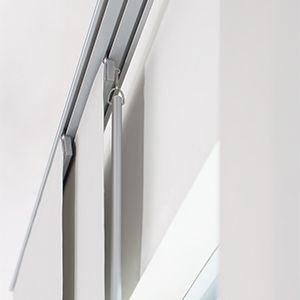
Baton
A baton is a thin rod that hangs just behind the leading panel. To adjust your blinds with a baton, you’ll simply grab the baton and pull it in the direction you want to adjust your sliding panel blinds.
Step 4: Decide on the Direction to Open
Direction to open refers to which way you’ll pull your blinds to cover your window. You have three options to choose from:
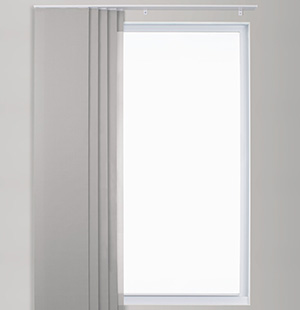
Stack Left Draw Right
Stacking left and drawing right means all your panels will stack to the left of your window, and you’ll move them toward the right to cover your window.
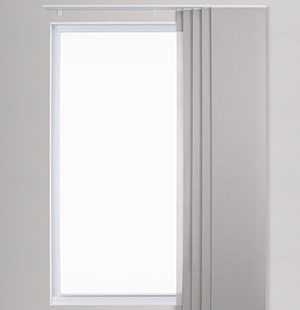
Stack Right Draw Left
Stacking right and drawing left means all your panels will stack to the right of your window, and you’ll move them toward the left to cover your window.
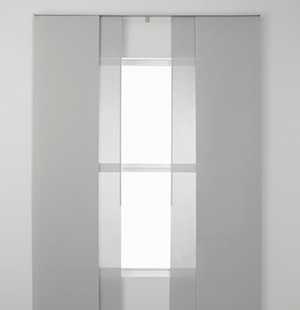
Split Draw: Open from Center
Split draw means half of your blinds will stack on the left and half will stack on the right, and you’ll adjust them toward and away from the center.
Step 5: Select Your Track Color
You have two versatile options when it comes to your track color: White or Silver.
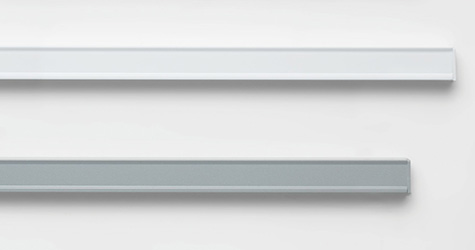
White – A matte white that is ideal for a ceiling mount application, as the soft white will blend into your ceiling.
Silver – Offers a subtle sheen and reflective quality helping it to blend into lighter wall colors or window frames.
How to Install Panel Track Blinds
Installing Panel Track Blinds is more involved than a Roller Shade because you are mounting a track rather than a single bracket, but it is manageable as a DIY project if you have the tools and want to save the install fee. For most homeowners, we recommend our professional installation to keep the warranty intact and to make sure the track sits level across a wide opening. If you want to install them yourself, here is what to expect.
What You Will Need
- Stepladder
- Pencil and tape measure
- Level (2-foot or longer for wide openings)
- Cordless drill and bits
- Screwdriver
- A helper for tracks wider than 60 inches
Step-by-Step Panel Track Blinds Install
- Step 1. Mark the bracket positions. Measure the length of your track system over your wall or window. Your brackets should be placed 4 inches from each end of the track system. If your Panel Track Blinds require more than two brackets, space the rest of the brackets evenly along the track length. Use a level to confirm the marks are aligned.
- Step 2. Drill and mount the brackets. Drill pilot holes at each marked point. For a drywall mount without a stud, use anchors rated for the weight of the blinds. Screw the brackets in place.
- Step 3. Attach the track. Snap the track into the brackets. On most models this is a click-in mechanism. Check that the track is level before locking it in.
- Step 4. Hang the panels. Slide each panel carrier into its channel on the track, align the Velcro strip at the top of each panel with the Velcro strip on the front face of the panel carrier and press them together. Order the panels front to back so the leading panel is the one closest to the room.
- Step 5. Test the motion. Open and close the blinds a few times. Check that the panels slide smoothly and that the leading panel closes fully against the wall or door frame.
For the illustrated install guide with model-specific instructions, see our Vertical Blinds installation guide. If any step feels uncertain once you have the blinds in hand, we recommend booking a professional installer rather than forcing the track into position.
Get an Estimate for Your Project
Once you’ve narrowed down your material, mount type, control option and opening direction, our Design Consultants can help you understand the cost of your custom Panel Track Blinds. Request a free quote or schedule a free measurement to get expert guidance, accurate sizing and recommendations for your space.
SCHEDULE A FREE PROFESSIONAL MEASUREMENT
Ensure your window treatments fit perfectly when you schedule a free measurement with our expert professionals.