





Natural warmth. Precise control.
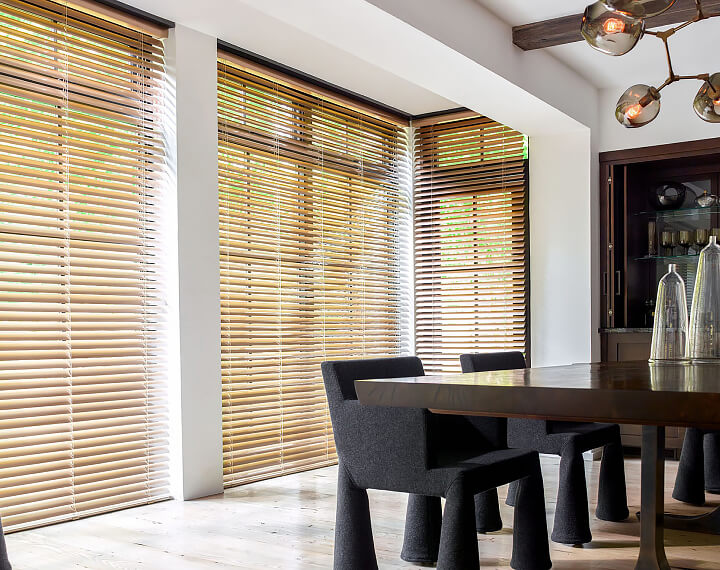
Wood Blinds bring natural warmth and character to your windows. Choose real wood, bamboo or moisture-resistant faux wood blinds, with adjustable slats for light control and decorative finishes to complement your space.
What You'll Love...
- Real wood, bamboo, and moisture-resistant faux wood options
- Adjustable slats for light and privacy
- Decorative cloth tapes and custom finishes
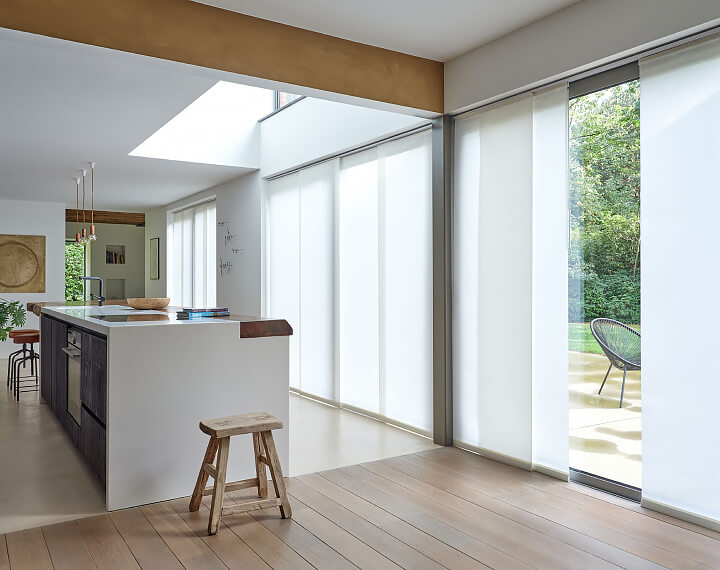
Made for wider openings
Vertical Blinds feature sliding fabric panels designed for large windows, sliding glass doors, and wide openings. Also known as Panel Track Blinds, they offer smooth side-to-side operation and a streamlined alternative to traditional drapery.
What You'll Love...
- Smooth side-to-side operation
- Light-filtering and solar materials
- Options for closets and room dividers
Precise control. Modern style.
Our Metal Blinds feature durable aluminum slats that tilt to adjust natural light and privacy. Available in 1-inch and 2-inch styles, these blinds offer a clean, streamlined look in a range of finishes.
What You'll Love...
- 1-inch and 2-inch aluminum slats
- Durable, easy-to-maintain construction
- Multiple finishes and control options
Shades, Blinds & Drapery
Not sure where to begin? Start by browsing our entire offering of custom treatments.
EXPLORE OUR CUSTOM BLINDS COLLECTION
Custom window blinds bring together precise fit, distinctive materials, and control over light and privacy. Explore our three styles, Wood, Metal, and Vertical Blinds, to find the right balance of natural character, clean lines, and functionality for your space. Our blinds are handcrafted in the USA and made to fit your window dimensions, with finishes and controls selected around your design and everyday needs. Connect with a Design Consultant for expert guidance, or request a free quote to begin your project. Wood Blinds and Faux Wood Blinds Wood Blinds bring natural warmth and character to traditional and contemporary interiors. Their horizontal slats tilt to adjust incoming light and privacy, while a range of wood grains and painted finishes helps connect your window treatments to the rest of the room. Choose responsibly sourced real wood for living rooms, dining rooms, and other spaces with lower humidity. For bathrooms, laundry rooms, and areas where moisture is a consideration, Faux Wood Blinds offer a wood-like appearance with resistance to moisture, mildew, and warping. Vertical Blinds and Panel Track Blinds Vertical Blinds, also called Panel Track Blinds, feature fabric panels that slide horizontally along a track. Their streamlined appearance offers a modern alternative to drapery for wide windows, sliding glass doors, and room-divider applications. Unlike horizontal slat blinds, these panels move across the opening rather than tilting. Choose from light-filtering and solar materials, with privacy and visibility depending on the fabric and lighting conditions. Metal Blinds and Aluminum Blinds Metal Blinds, also known as Aluminum Blinds, pair durable, easy-to-maintain construction with a clean, understated appearance. Available in 1-inch and 2-inch slat styles, they offer adjustable light and privacy in finishes that complement a range of interiors. Both sizes feature tilting slats, but their lifting options differ. The 1-inch collection offers wand tilt only and cannot be raised or lowered. The 2-inch collection offers cordless lift or eligible motorized tilt configurations with No Lift control. Adjusting Daylight and Visibility Wood and Metal Blinds let you adjust the slat angle to manage daylight and privacy without raising the treatment. Tilt the slats to welcome more light or close them to reduce incoming light and visibility. Openings between slats and gaps around the treatment can still admit light. Covering Sliding Glass Doors Consider Vertical Blinds for sliding glass doors and wide openings where access matters or use them as room dividers to define spaces. Plan where the panels will gather when open and how they will clear handles, nearby furnishings, and the part of the doorway you use most often. Creating Greater Room Darkness Blinds reduce incoming light, but gaps between slats and around the treatment can limit room darkness. For bedrooms, media rooms, or other spaces where greater darkness matters, explore blackout window treatments or ask a Design Consultant about layering options. Cordless Lift and Wand Tilt Eligible Wood and 2-inch Metal Blinds offer cordless lift, allowing you to raise and lower the treatment using the bottom rail. A separate wand adjusts the slat angle. This combination offers a streamlined appearance without a hanging lift cord. Available controls depend on the product and selected options, including decorative details. Motorized Tilt Motorized tilt is available for eligible 2-inch Wood and 2-inch Metal Blinds with No Lift control. Compatible remote, app, and smart-home controls offer convenient ways to adjust the slat angle. The motor controls tilt only. These configurations remain lowered and cannot be raised. Vertical Blind Controls Vertical Blinds offer cord loop or baton controls to slide the fabric panels across the track. A cord loop uses a tension device, while a baton lets you move the panels without a hanging control cord. Your Design Consultant can help you select controls based on how often you adjust your blinds, how easily you can reach the window, and whether you need to raise the treatment. Select Materials and Finishing Details Compare wood grains, painted finishes, metallic tones, and fabric textures against your walls and furnishings. Natural wood can add warmth, painted finishes can blend with trim or introduce contrast, and aluminum offers crisp, clean lines. Complimentary swatches let you explore colors and materials in your own space. Ask your Design Consultant about compatible valances and decorative details for your chosen product. For Wood Blinds, decorative tape adds another design detail and requires a No Lift configuration. The slats can still tilt, but the blinds cannot be raised or lowered. Inside and Outside Mounting Inside mounting positions the treatment within the window frame for a clean, built-in appearance. It requires sufficient depth for the selected product and control type. Outside mounting positions the treatment beyond the opening and can make the window appear larger. Depending on the installation, extending coverage beyond the opening may also help reduce light around its edges. Vertical Blinds also offer ceiling-mounted applications, including room dividers. Your Design Consultant can help evaluate window depth, surrounding trim, handles, and the space needed for panels to gather when open. What is the difference between blinds and shades? Our Wood and Metal Blinds use adjustable horizontal slats, while our Vertical Blinds use sliding fabric panels. Window Shades generally use fabric or woven materials that roll or fold as they rise. Compare how each treatment manages light, privacy, and access alongside the appearance you want at the window. How do I measure for custom blinds? Measurements depend on your blind style, mounting approach, and control type. Follow the instructions for your exact product, since minimum mounting depth and ordering allowances vary. For help with your windows, request a professional measurement. In-home measurement is complimentary within our service area; charges may apply outside that area. Installation is available at an additional charge. How should I clean my blinds? Care depends on the material. Dust gently and follow the instructions for your specific blinds before using water or cleaning products. Real wood, aluminum slats, and fabric panels require different approaches. See our guide to cleaning blinds for material-specific guidance. How should I style my blinds? Start with the effect you want to create. Wood grains introduce warmth and texture, painted finishes can coordinate with trim or create contrast, and Metal Blinds add clean lines. Sliding fabric panels offer a streamlined treatment for wider openings. For added softness and dimension, ask your Design Consultant about pairing blinds with drapery and coordinating materials across the room. Which child-safety options are available? Ask your Design Consultant about cordless options and Best for Kids certification for your selected product and configuration. Review the product-specific safety information and installation requirements before ordering. Visit a The Shade Store showroom to explore materials, compare finishes, and experience how different blinds operate. Our Design Consultants can help you bring together the right light control, privacy, mounting, and finishing details for your windows. Take home complimentary swatches to compare against your walls, furnishings, and lighting, or schedule a complimentary design consultation to discuss your project.COMPARE TYPES OF WINDOW BLINDS
CHOOSE BLINDS FOR LIGHT, PRIVACY, AND ACCESS
UNDERSTAND BLIND CONTROLS AND LIFT OPTIONS
CUSTOMIZE FINISHES AND MOUNTING
COMMON QUESTIONS ABOUT CUSTOM BLINDS
COMPARE CUSTOM BLINDS IN PERSON