Find a Showroom
The Best Curtains to Keep Heat Out Year-Round
If you’re looking for curtains to keep heat out, you want to keep your home cooler and more comfortable. Curtains are an excellent choice for insulation — from both the heat and the cold — thanks to their long panels of fabric that trap hot and cold air at your window. However, to optimize the insulating ability of your drapery, it’s important to choose the right customizations. Learn more about how to choose the best heat blocking curtains for your home.
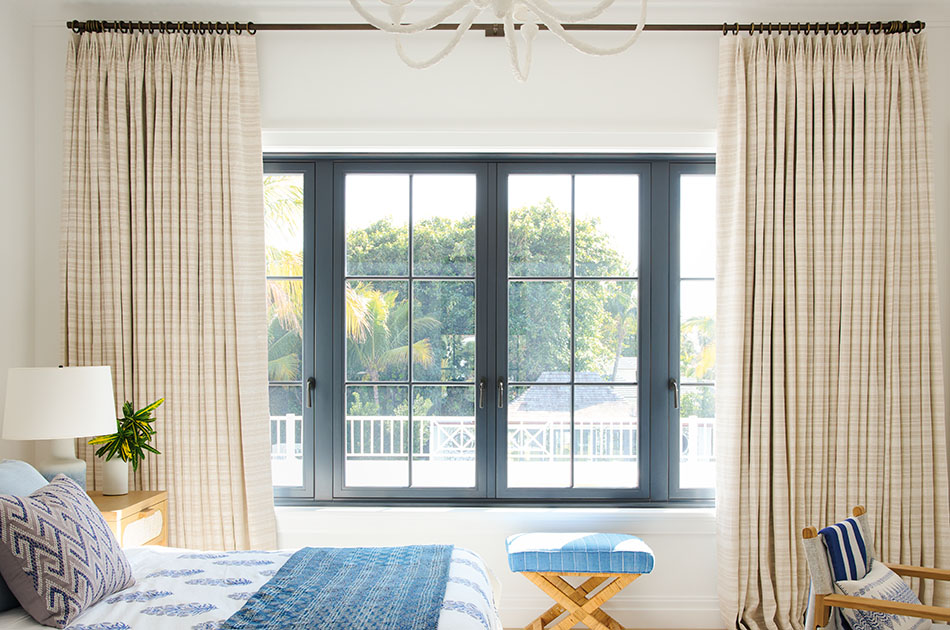
Cover photo: Tailored Pleat Drapery, Victoria Hagan Tidal Line in Natural, design by Victoria Hagan
Do Curtains Help Keep Heat Out?
Yes, when made from the right fabrics, heat-blocking curtains can effectively manage heat and keep your home cool and comfortable in the summer.
Denser, thicker fabrics, especially paired with lining, help block air from the outdoors and trap it at your window. Take a closer look below at the best fabric choices for curtains to keep heat out.
Year-Round Benefits of Heat-Blocking Curtains
Curtains are practical solution for keeping your home comfortable all year long. The same heavyweight panel that helps keep heat out in the summer can also help keep cold out in winter. In this way, curtains that keep heat out are an effective, practical investment for your home. To achieve the best thermal and heat-reducing curtains that perform in every season, the fabric and lining choices below make all the difference.
The Best Curtains to Keep Heat Out
To choose the best curtains for your needs, it’s important to understand the specific features that contribute to their performance. Learn how to customize your curtains for heat management with the following steps that cover fabric type, color choice, insulation, panel length and more.
In this section
Step 1: Choose Heavyweight Fabrics
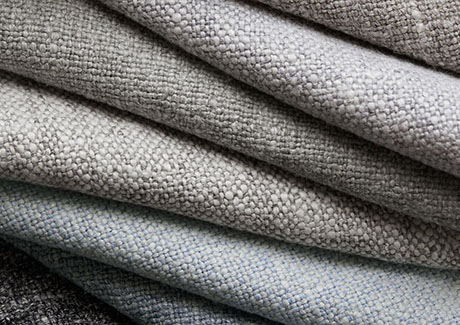
Heat-blocking curtains should use denser, thicker fabrics that are better suited for blocking heat than lightweight fabrics. Their tight weaves and weight effectively block air from the outdoors and trap it at your window for effective heat management. With the right selections, curtains that block heat can make a meaningful difference to your energy bills and indoor comfort, particularly during the warmer months.
Cottons
Cotton is versatile, offering a balance between weight and breathability. Its natural absorbency also means it can help in regulating humidity within your home, contributing further to a cooler, more comfortable environment. For the best heat-blocking ability, opt for tightly woven, medium-to-heavyweight cotton drapery.
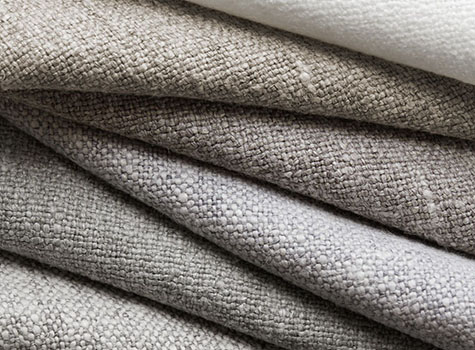
Heavyweight Linens
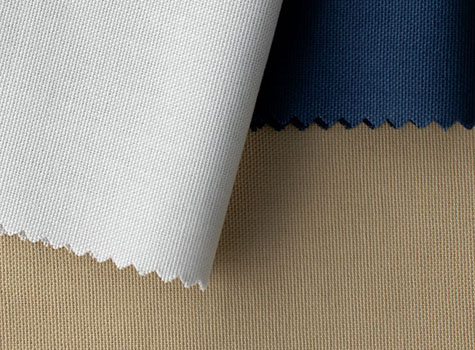
Made with a tight, dense weave, heavyweight linens like Luxe Linen as well as linen blends, offer great heat blocking ability. Like cotton, they’re also absorbent, and so help to control the humidity in your home as well for a more temperate climate.
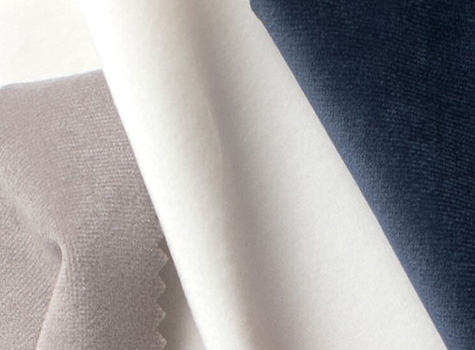
Velvet
Velvet is a luxuriously soft fabric known for its dense pile (raised loops or strands of yarn), which help trap air, making it an excellent insulator. It’s particularly effective in cold climates but also works well as a heat-resistant curtain fabric, keeping summer heat at bay.
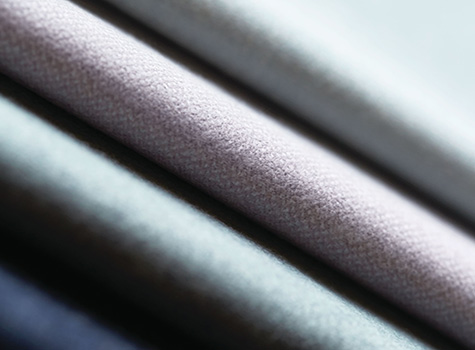
Wool & Wool Blends
Wool is a natural fiber that’s been used for centuries for its insulating properties. Wool and many wool blends feature a complex structure that traps air in its fibers, which regulates your interior temperatures by preventing heat from entering a room during warm days.
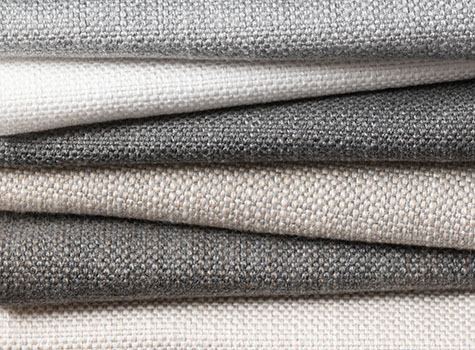
Sunbrella Performance Fabrics
Sunbrella performance fabrics are incredibly durable and excellent at blocking UV rays, so your fabric remains richly hued and your interiors stay cooler. Sunbrella fabrics range in weight, but thicker options like Alma, a heavyweight linen-like material, and Velarte, a durable canvas, stand out as some of the best cooling curtains for summer.
Step 2: Opt for White or a Light Color
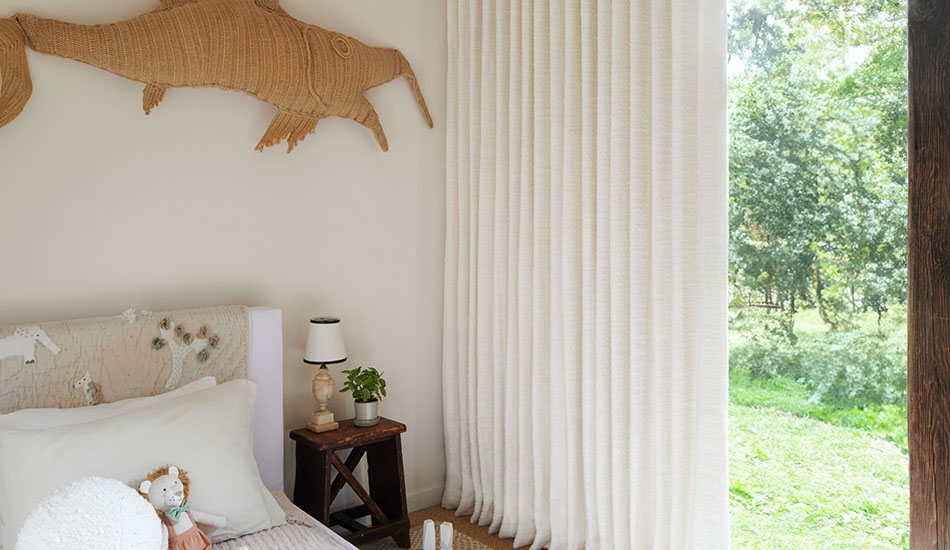
Light-colored drapery reflects sunlight, while darker colors absorb light and convert that light into heat. Choosing white or other similarly light colors can further improve the heat-blocking performance of cooling curtains for summer.
Explore a few white and light options from the heavyweight fabric collections mentioned above to get started.

CanvaS IN
oPTIC wHITE
A thick cotton fabric with great durability and a soft touch.
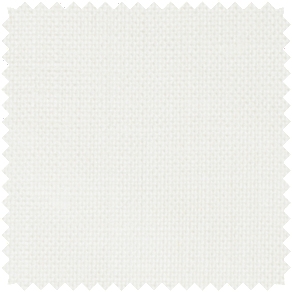
lUxE lINEN
IN Oyster
A heavyweight linen with a luxe look and soft feel.

vELVET
IN wHITE
A plush, luxurious velvet with a soft, inviting touch.

Wool Flannel
in Glacier
A thick luxe wool with a brushed texture for a tactile experience.
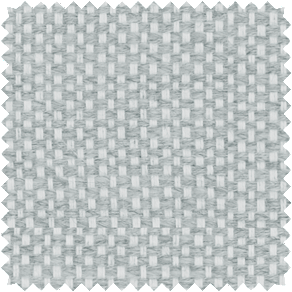
Sunbrella Alma
in Dove
A heavyweight fabric with durability and a linen-like texture.
Step 3: Add Lining for Better Insulation
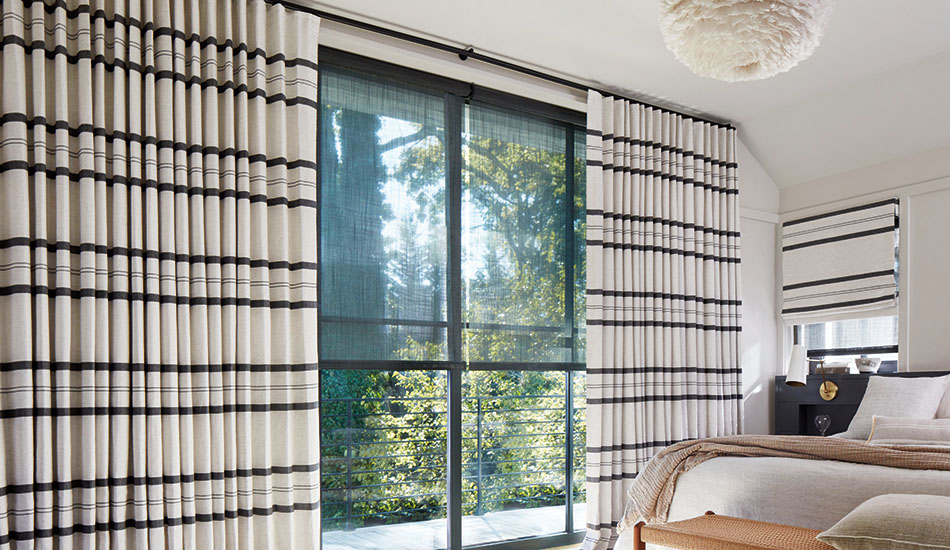
When it comes to what curtains keep heat out most effectively, drapes with lining are a great choice. Lining refers to fabric added to the backside of your drapery panels, and it is typically made with white or off-white fabric, often polyester, that reflects light. Adding lining allows you to choose a darker color fabric for your drapes without it absorbing too much heat from the sun. Lining, especially blackout lining, offers a great light-blocking effect for curtains that keep heat out, which means fewer sun rays filter through to warm your home.
For even greater insulation, layering shades and curtains together is one of the most effective approaches. A blackout roller shade beneath your drapery, for example, combines the light-blocking power of the shade with the insulating ability of the drapes.
Thermal Curtains for Insulation
If your goal is to insulate a room to keep the heat in, consider thermal curtains designed to help manage heat transfer through your windows. Thermal curtains typically use a combination of dense fabrics and added lining to help trap warm or cool air at the window before it reaches the rest of your room. When paired with the right fabric, lining, length and hardware, they can support a more comfortable interior year-round.
Step 4: Choose Floor-Length Drapery and Hang It High and Wide
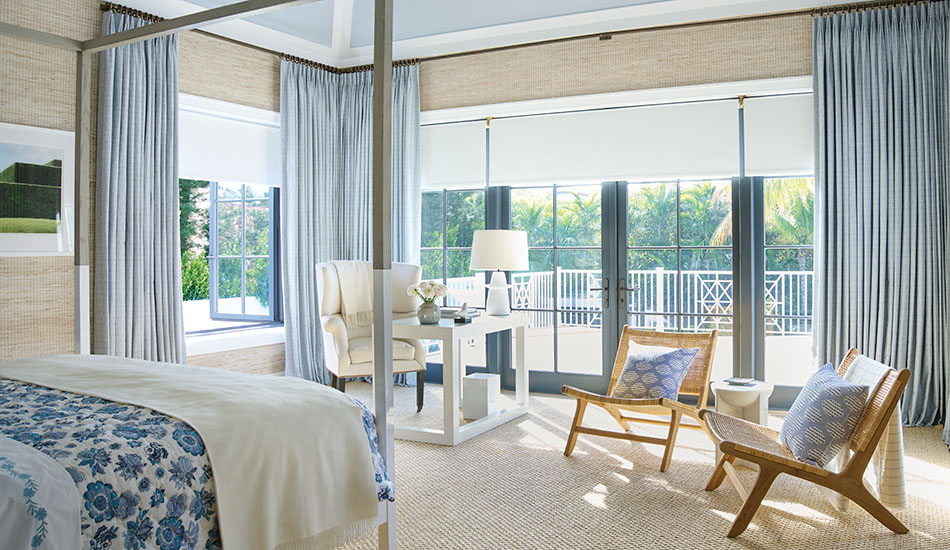
Taller, longer drapery panels can improve insulation by creating more complete coverage around your window. When curtains are hung high and wide and extend to the floor, they help trap air between your curtains and the window before it moves into the room. For better heat control in summer and added protection from cold drafts in winter, follow these best practices for floor-length drapery.
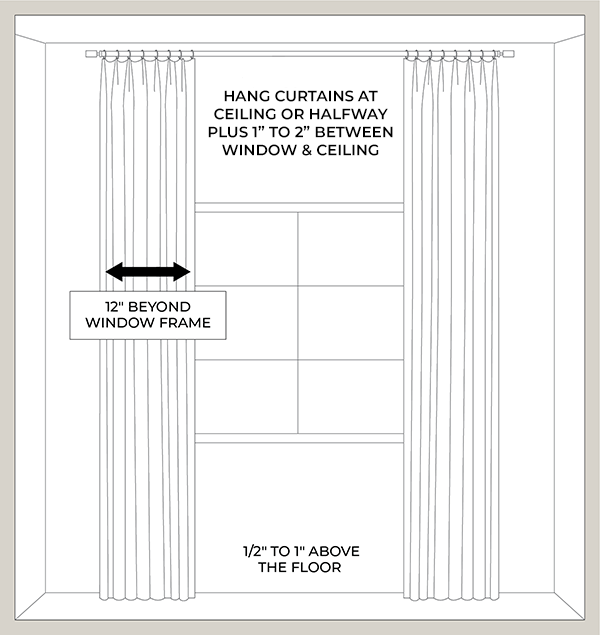
- Hang your drapery high – A little more than halfway between the top of the window and ceiling is a good rule of thumb. Or, about 8-10 inches above the window frame if you have very tall ceilings. Since heat rises, this approach is especially effective at trapping the hot air coming in from the top of your window.
- Hang your drapery wide – Install your curtain rod so it extends about 12 inches on each side of your window. This allows full coverage over the sides of your window to block heat more effectively. It also allows you to pull your drapes fully off the window if you desire.
- Choose floor-length drapery – Floor-length drapery, where the panels float above or just graze the floor, more effectively traps hot air at your window, keeping the rest of your interior more comfortable.
Not only are these best practices great for heat insulation, but they’re also aesthetically pleasing. Hanging your drapery high and wide and choosing a length that grazes the floor creates a sense of height and spaciousness in your room. The tall, wide panels also make your window seem larger.
Step 5: Consider Functionality
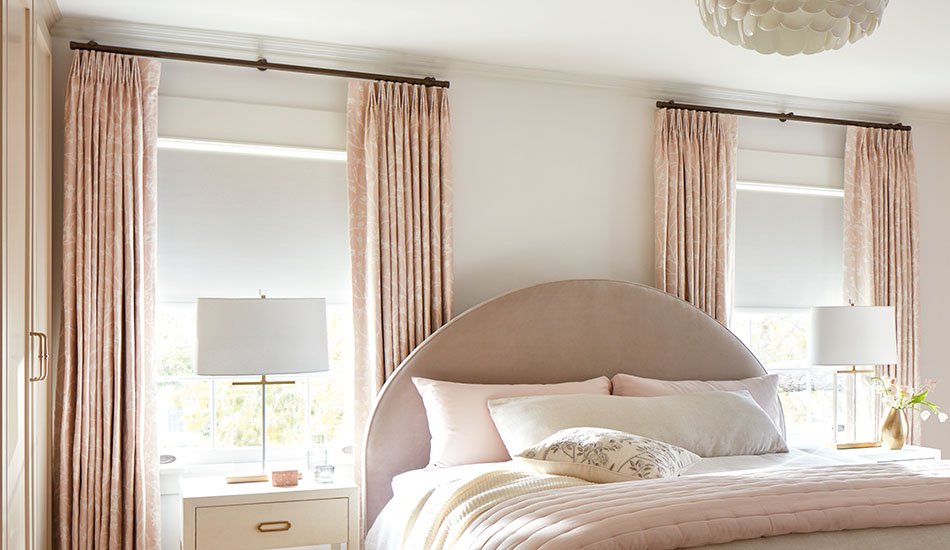
When thinking about curtains to keep heat out, functionality is an important piece to consider. You’ll likely want to be able to pull your curtains closed easily to block heat and open them just as easily if there’s a cool breeze. Choosing functional drapery is all about selecting the right pleat style and hardware.
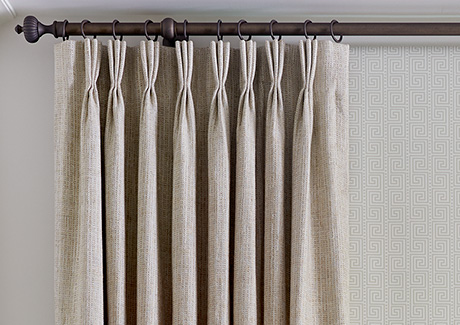
pleat styles
Drapery is available in several pleat styles, from sleek, modern designs to more classic, traditional looks. Pleat styles also vary in terms of functionality. Some styles like Ripple Fold and Tailored Pleat Drapery are very functional while others like Grommet and Goblet Drapery are less easy to move, making them better suited as stationary decorative panels.
Pictured: Outer Layer: Pinch Pleat Drapery, Shoreline in Reed and Inner Layer: Roller Shades, Alexa Hampton Corfu Blackout in Silver Spoon, photography by John Bessler
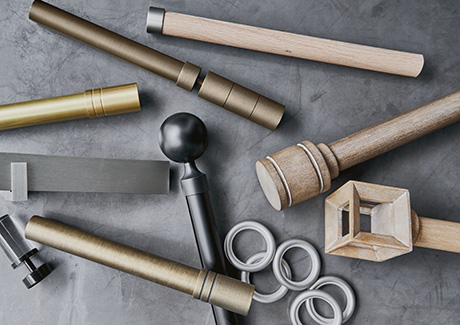
hardware
Drapery hardware comes in three main categories: rod and rings hardware, track system hardware and motorized track systems. For the easiest functionality, choose a track system, either motorized or manual. Keep in mind as you consider drapery hardware that not all pleat styles are compatible with all hardware types, so make sure to choose the right combination.
Pictured: Assorted Drapery Hardware, photography by Gentl Hyers
Wondering if there are other options beyond curtains to keep heat out? Several other window treatments can help mitigate heat buildup in your home for a more temperate climate. Learn more about other window treatments that can help block heat.
Heat-Blocking Alternatives to Curtains
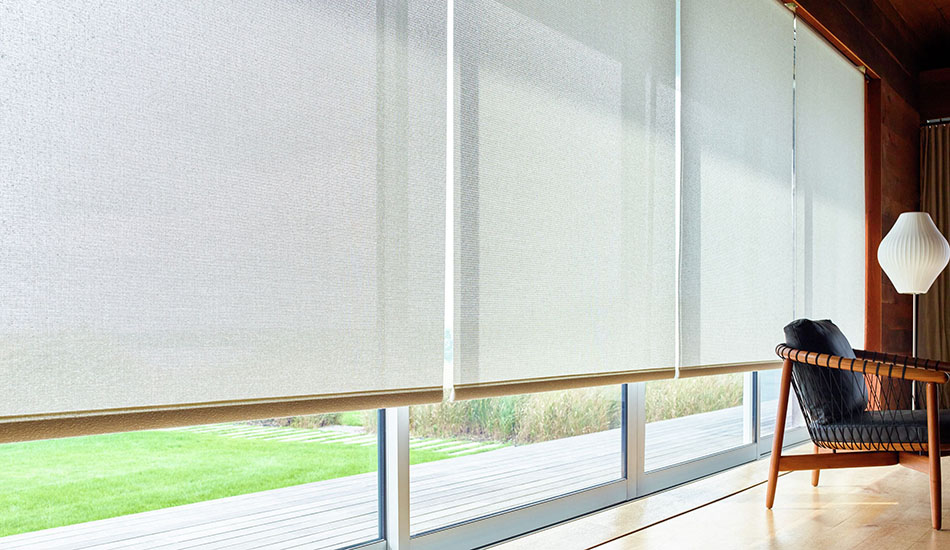
Beyond curtains to keep heat out, there are several other window treatments you can choose from that may better suit your style or application. While all window treatments will help to some degree with blocking heat, some are better than others. For the best heat management, custom shades like Solar and Cellular Shades are your best bet.
Solar Shades
Solar Shades are a type of Roller Shade made with unique material that blocks UV rays, the source of heat, while still letting natural light flood your home. Solar Shades come with different transparency levels that refer to the level of UV protection and how well you can see through them. For instance, 1% transparency means the shade blocks up to 99% of UV rays and is the opaquest. A 10% transparency means the shade blocks up to 90% of UV rays and offers the clearest view through it. For rooms that receive intense sun exposure, such as sunrooms or home offices, Solar Shades are an effective heat-reducing curtain alternative.
Pictured: Solar Shades, 10% in Black
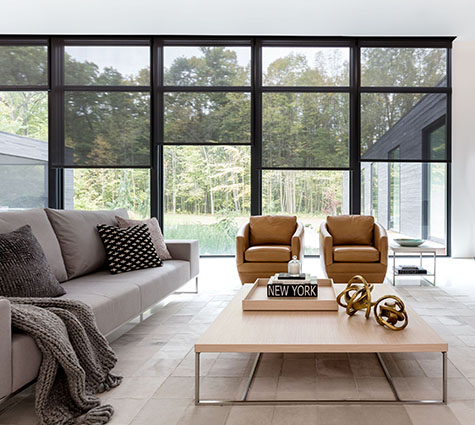
Cellular Shades
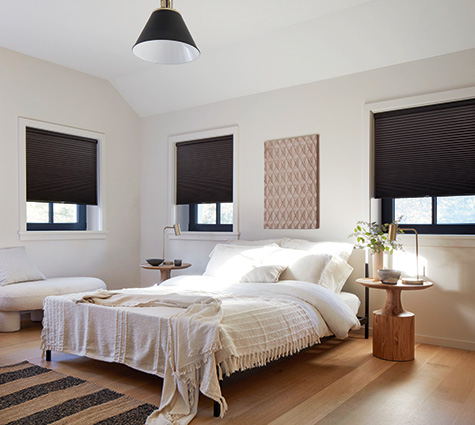
Featuring honeycomb cells that expand and contract like an accordion when the shade is raised or lowered, Cellular Shades offer excellent insulation. The cells trap both hot and cold air coming through your window, which keeps your interior temperatures more comfortable year-round.
Pictured: Cellular Shades, ¾” Single Cell Blackout
Find the Perfect Curtains to Keep Heat Out
With a better understanding of how to choose the best curtains to keep heat out, as well as insight into alternatives beyond curtains, you are ready to consider making your final selections. Schedule a free design consultation at your nearest showroom, where you will be able to explore all your product options in interactive displays and connect with an expert Design Consultant. During your consultation, your Design Consultant will work to understand your unique needs and style preferences to guide you toward the perfect window treatment solution. Plus, they will be able to place your order for you when you make your final selections for a smooth ordering process.

GET THE GUIDANCE YOU NEED
Schedule a free design consultation with our talented Design Consultants for guidance on product choice, material selection and more.