Find a Showroom
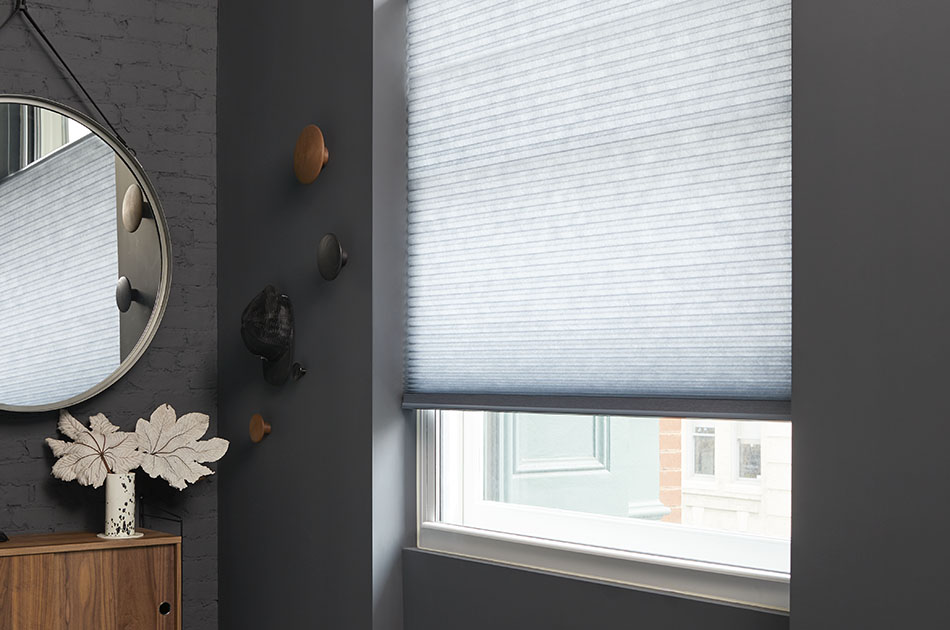
What Are Cellular Shades? Honeycomb Shade Options & Benefits
Wondering whether Cellular Shades are right for your home? This article covers how they work, the single-cell and double-cell options, the light-filtering, blackout, and day/night material choices, and the rooms where Cellular Shades make the most sense (plus the few where they do not).
It also answers the two questions we hear most often: whether Cellular Shades and Honeycomb Shades are the same thing, and how they compare to other window treatments like Pleated Shades, Roman Shades, and Roller Shades.
Key Takeaways: Cellular Shades
- Cellular Shades and Honeycomb Shades are the same product. The terms are used interchangeably.
- Their honeycomb-shaped cells trap air, delivering some of the best insulation of any window treatment.
- Single-cell styles suit smaller windows and modern rooms. Double-cell styles add texture and better insulation for larger windows.
- Light-filtering, blackout, and day/night materials provide varied privacy and light control for different rooms.
- Cellular Shades work best in living areas and bedrooms. Skip them for most kitchens and bathrooms.
In this article
What Are Cellular Shades?
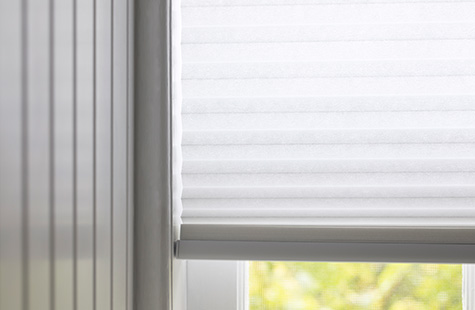
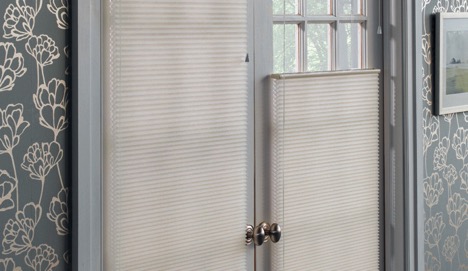
Cellular Shades, sometimes called Honeycomb Shades or Cellular Blinds, are a window treatment made from pleated fabric that forms a series of honeycomb-shaped cells.
These honeycomb cells expand and contract like an accordion as the shade is raised and lowered, creating a clean, streamlined look. Available in a range of fabrics, colors and opacity levels, Cellular Shades work well in many rooms and design styles.
Cellular vs Honeycomb Shades: Are They the Same?
Yes. Cellular Shades and Honeycomb Shades are the same product. The terms are used interchangeably and both describe the same pleated fabric construction with honeycomb-shaped cells.
‘Honeycomb’ describes the shape of the cells when you look at the shade edge-on. ‘Cellular’ describes the same structure from a functional angle, since the cells are what create the insulating pocket. Retailers, manufacturers and interior designers use the two names interchangeably, so you can shop with confidence whether a product is labeled Cellular Shades, Honeycomb Shades, Cellular Blinds or Honeycomb Blinds.
What Are Cellular Shades Made Of?
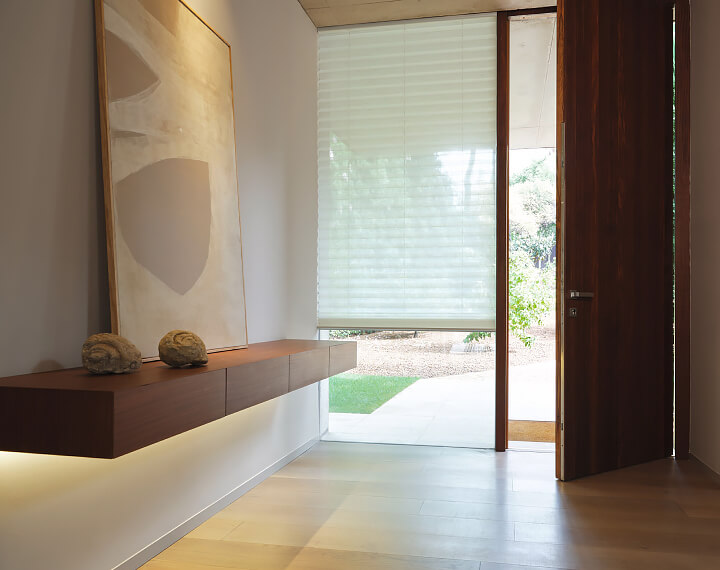
Cellular Shades are made from pleated fabric that is typically a blend of polyester, non-woven material or a bonded polyester weave that holds its pleated shape over time.
Different opacity levels are available based on the fabric and weave. Sheer and light-filtering styles use lighter, more open weaves and fabrics that let in more light. Blackout shade styles use a dense fabric plus an opaque liner bonded to the back of the cells.
Designer Insights
For most everyday living rooms and bedrooms, Cellular Shades stand alone beautifully in a neutral color. When the room calls for something more formal or when the window sits in a design-forward space, layer them under Ripple Fold Drapery so the Cellular Shade does the insulation work quietly while the Drapery carries the design story.
Which Is Better, Pleated or Cellular Shades?
Compare a few key differences between types of Cellular Shades as well as Cellular Shades vs Pleated Roman Shades to get a sense of your options. The best shade for your space depends on your project goals.
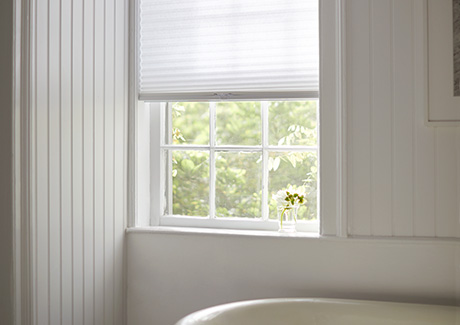
A Cellular Shade: Sleek & Efficient
Cellular Shades have a simple design and efficient functionality that makes them more utilitarian and ideal for everyday use.
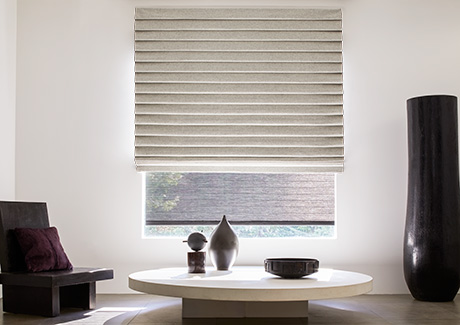
a Pleated Roman Shade: Luxe & Dramatic
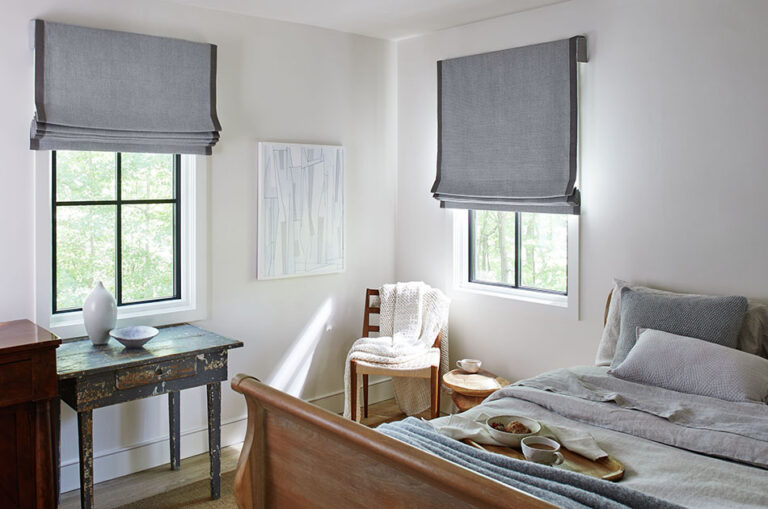
Pleated Roman Shades feature luscious folds of fabric for an elegant, luxurious aesthetic that makes them a strong statement piece.
Single-Cell vs. Double-Cell Cellular Shades
Cellular Shades are available in single-cell and double-cell constructions. The difference comes down to the number and size of the honeycomb layers, which can affect the shade’s look, light filtration and insulating performance.
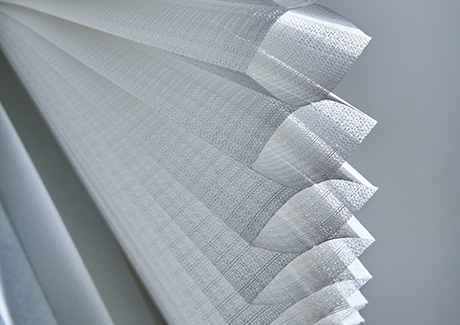
Cellular Shades with Single Cells
Single cells are 3/4-inch wide and give you a more minimalist, sleeker aesthetic and often better light filtration thanks to the single layer of cells.
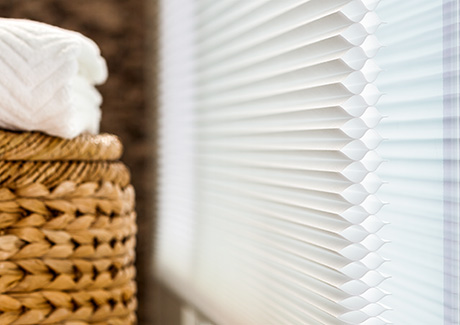
Cellular Shades with Double Cells
Double cells feature two layers of 3/8-inch wide cells, front-to-back on your shade that create smaller pleats for a more linear, textured appearance.
Benefits of Cellular Shades
Cellular window shades, with their unique honeycomb design, offer several benefits that elevate the look of your windows while providing greater functionality in terms of light and privacy control.
- Install flexibility – The small stack also helps with installation, as the shades can be inside-mounted (mounted into the window frame) in most windows, even those with a shallow depth.
- Versatile design – With their chic, simple design and neutral color selections, Cellular Shades look right at home in nearly any home aesthetic style.
- Easy functionality – Whether you choose continuous loop, cordless or motorized Cellular Shades, you’ll enjoy easy-to-use shades ideal for everyday adjustments.
- Energy efficiency – Thanks to their fabric cells that trap hot and cold air alike, Cellular Shades help regulate your interior temperature for a more comfortable environment — and maybe even reduced energy bills.
- Nearly disappears when raised – Cellular Shades have a very small stack, which refers to the size of your shade when it is fully raised, making for a sleek, minimalist aesthetic.
Cellular Shade Options & Customizations
Cellular Shades come in a few core styles and control types. Here is what you can customize:
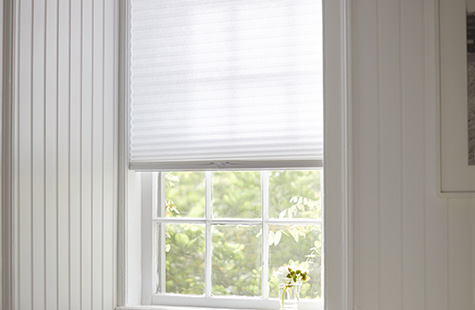
Light-Filtering Cellular Shades
Made with semi-transparent to sheer fabric, Light-Filtering Cellular Shades soften the natural light in your room for a soft, inviting glow. These types of shades also provide some privacy, but the more transparent the material, the less privacy you’ll have. Choose from single and double cell options, as well as 30+ neutral colors to find the right fit.
Blackout Cellular Shades
What is a cellular shade with blackout material? Blocking up to 99% of the light coming through your window with their fabric cells made of opaque material, Blackout Cellular Shades provide a great room darkening effect and excellent privacy that’s ideal for bedrooms. Choose from single and double cell options as well as 15+ solid colors.
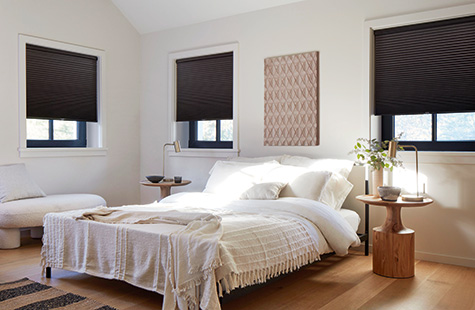
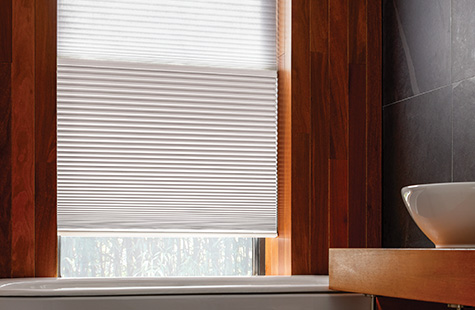
Day/Night Cellular Shades
Get the best of both light-filtering and blackout Cellular Shades with Day/Night Cellular Shades. These types of shades feature a blackout material on the bottom and a light-filtering material on the top, both of which you can adjust for the right amount of light and privacy. Day/Night Cellular Shades only feature single-cell designs and come in several different blackout and light-filtering colors for you to mix and match for the right combination.
Control Types for Your Cellular Shades
In addition to choosing the right style of Cellular Shade, you also have a few different control types to choose from. Control types refer to the mechanism used to open and close your shades. Your options include:
- Continuous loop – With a continuous loop system, you have a looped chain that runs from the headrail of your shades and is kept taut at the bottom by a tension mechanism. To adjust your shades, pull one side of the chain up or down. Continuous loop control is only available for Light-Filtering and Blackout Cellular Shades but is not compatible with Day/Night Cellular Shades.
- Cordless – A cordless window treatment system allows you to adjust your shade simply by pulling down or pushing up on the bottom rail. The tension control in the headrail does the rest, keeping the shade in its desired position.
- Motorization – For truly effortless ease in your light and privacy control, opt for motorized window treatments. With motorized Cellular Shades, you can control the position of your shades with a remote, an app on your smartphone or tablet, or even the sound of your voice when the motor is paired with a smart home device. Motorization is only available for Light-Filtering and Blackout Cellular Shades but is not compatible with Day/Night Cellular Shades.
When to Choose Cellular Shades
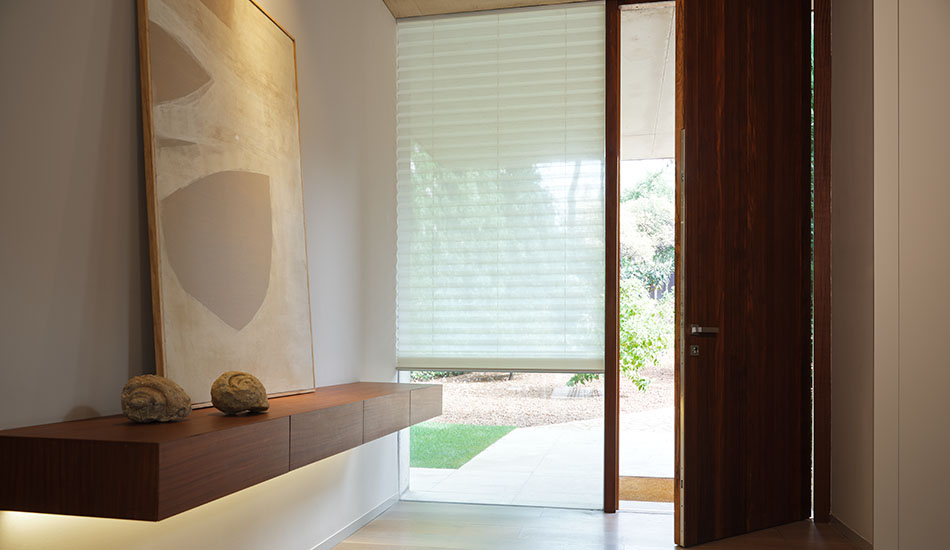
Cellular Shades are an ideal choice in several situations:
- Sunny or drafty rooms – Any room that has temperature fluctuations with the changing of the weather and seasons is an excellent place for Cellular Shades. With their honeycomb cells, these shades will trap hot and cold air alike, helping to regulate your interior temperatures, even in very drafty or sunny rooms.
- Rooms where you need privacy and/or a room darkening effect – Both Light-Filtering and Blackout Cellular Shades provide you with privacy, as you can’t fully see through either type of shade during the day or night. However, for the best privacy as well as a room darkening effect ideal for bedrooms and media rooms, choose Blackout Cellular Shades.
- Windows with a narrow depth for inside mount – If an inside-mount application is the preferred or only viable installation method for a certain window or room, Cellular Shades could be the ideal choice. With a depth requirement of only 5/8-inch to 7/8-inch depending on your chosen control type, Cellular Shade can be inside mounted in most windows.
When Not to Choose Cellular Shades
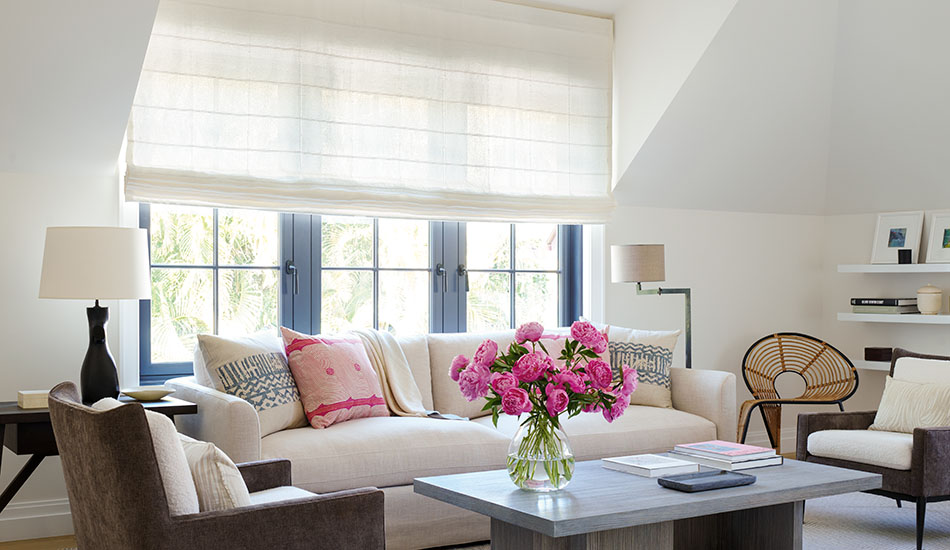
While there are plenty of applications where Cellular Shades are an ideal choice, there are a few situations where you might be better off with a different type of shade. Situations where you might not want to choose Cellular Shades include:
- Formal rooms with elevated décor – Since Cellular Shades have a more streamlined, minimalist look to them, they may not suit rooms with luxurious furniture and décor like formal dining rooms and living rooms. For these rooms, it may be better to choose a more elegant style of shade such as Roman Shades (pictured above).
- In high humidity, moisture-prone areas – Cellular Shades are made from a fabric material that’s vulnerable to humidity and moisture damage when exposed on a regular basis. Rooms like kitchens, bathrooms and basements typically feature higher humidity and moisture levels, so consider a more moisture-resistant window treatment like Roller Shades, Metal Blinds or Faux Wood Blinds.
Cellular Shades vs Other Window Treatments
Choosing between Cellular Shades and other window treatment types comes down to whether you want function-forward efficiency or a more statement-making look. Cellular Shades offer a clean fabric appearance with strong insulation, a small stack and simple everyday function. Compared to Pleated Shades, Roman Shades, Roller Shades and Blinds, they are often the better choice when you want a simple window treatment that supports light control, insulation and privacy without adding visual weight.
| Compared To | Cellular Shades Strengths | Better Choice When |
| Pleated Shades | Better insulation, more control options, smaller stack | You want the same clean look with insulation |
| Roman Shades | More affordable, better insulation, smaller stack | You want a functional, minimalist window |
| Roller Shades | Better insulation, softer texture | You want a room-warming look with energy performance |
| Blinds (Wood, Faux, Metal) | Softer look, better insulation, no slats to dust | You want fabric rather than hard slats |
How Do I Choose the Right Size Cellular Shades for My Windows?
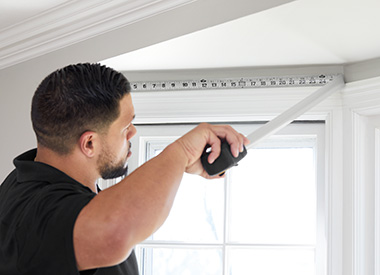
Choosing the right size Cellular Shades starts with accurately measuring your window width and height. You should also consider the cell size, since smaller cells often suit smaller windows, while larger cells can look more balanced on wider windows. For the best fit, custom cellular blinds for windows or honeycomb shades can be measured to match the exact dimensions of each window.
How Do You Measure the Cell Size of Cellular Shades?
To measure the cell size of Cellular Shades, measure from the center of one pleat to the center of the next pleat when the shade is fully expanded. Cell sizes typically range from small to large, and the best option often depends on the size of the window and the desired appearance. Larger windows are often paired with larger cell sizes for a more proportional look.
How Do You Clean Honeycomb Blinds?
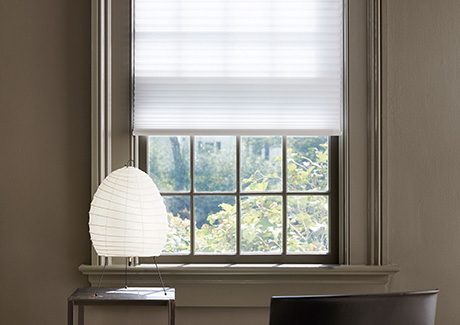
Honeycomb blinds can typically be cleaned by regularly dusting them with a feather duster, microfiber cloth, or the brush attachment of a vacuum. For deeper cleaning, spot-clean the fabric with a soft cloth and mild soap solution, taking care not to saturate the material. Always follow the manufacturer’s care instructions to help maintain the appearance and performance of the shades.
Explore Your Cellular Shade Options Further
Ready to see Cellular Shades in your space? To explore your options further, order free samples of your favorite types and colors to get a sense for which looks best in your space and provides you with the light control and privacy you need. Be sure to hold up samples to the light to see how well they block light or let it gently filter through.
ORDER YOUR FAVORITE SWATCHES FOR FREE
Compare as many of your favorites from our collection of 1,200+ premium materials at home when you order free swatches online.