Find a Showroom
How to Put Blinds Down by Control Type
Wondering how to put blinds down? Operating blinds will vary depending on the type of blinds you have and the specific control system. Plus, it’s important to consider that the controls for lifting or lowering your blinds and the controls for tilting the slats are different. Knowing how to pull down blinds correctly depends on which system you have.
The most common blinds with horizontal slats have the following control for lifting and tilting:
- Cordless lift, where pushing up or pulling down on the bottom rail of your blinds adjusts them, and wand tilt, where twisting the wand tilts the slats up or down.
Other control types include the following:
- Motorized blind tilt, where you do not lift or lower your blinds but can tilt the slats with a remote, an app on your phone, or by the sound of your voice when paired with a smart home automation system.
- Cord-lock, where two cords control the height and tilt of the slats separately. This is an older control type typically found on existing blinds.
- Vertical blinds with a cord draw, where a single looped cord slides the panels open and closed along a track system.
- Vertical blinds with a baton, where a baton on the leading panel lets you draw the panels open and closed by hand.
Not sure which type you have? The sections below cover each one in detail.
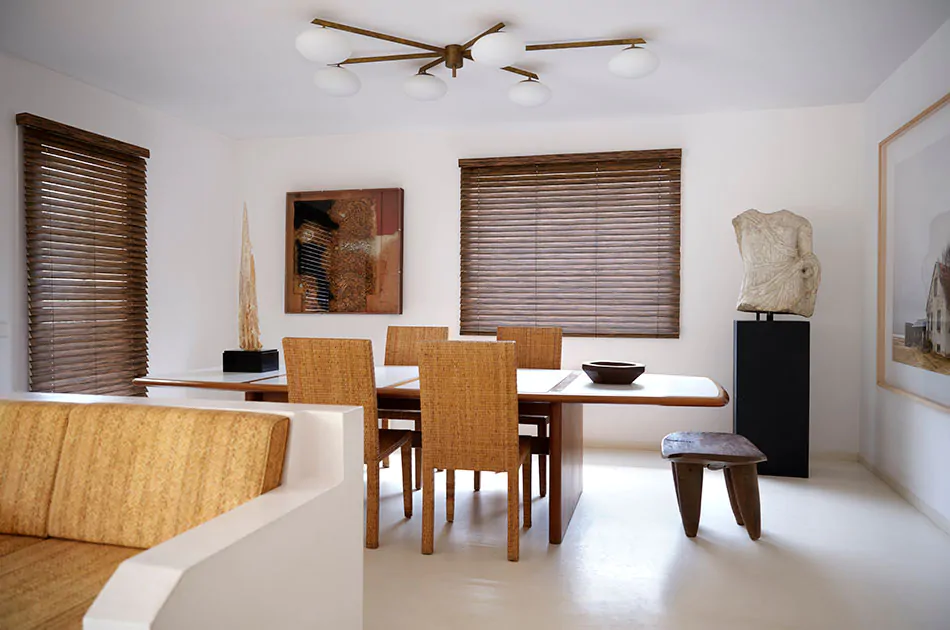
Cover photo: Wood Blinds, 2-inch Exotic in Ebony
A Note on Blinds with Strings and older controls
Blinds with strings, or blinds with cord-lock control where pulling a cord adjusts the blinds, use a control type you’ll typically find on older sets of blinds. This type of control is no longer available for Blinds or Shades from The Shade Store, as the industry standard has moved away from window treatments with cords in an effort to make them safer for children. Still, cord-lock control does exist on older sets of blinds, so we’ll walk through how to put blinds down with strings using this control type.
Get step-by-step guidance for how to let blinds down and lift them up with each of the control types so you can properly control your light and privacy.
How to Put Blinds Down with Cordless Control
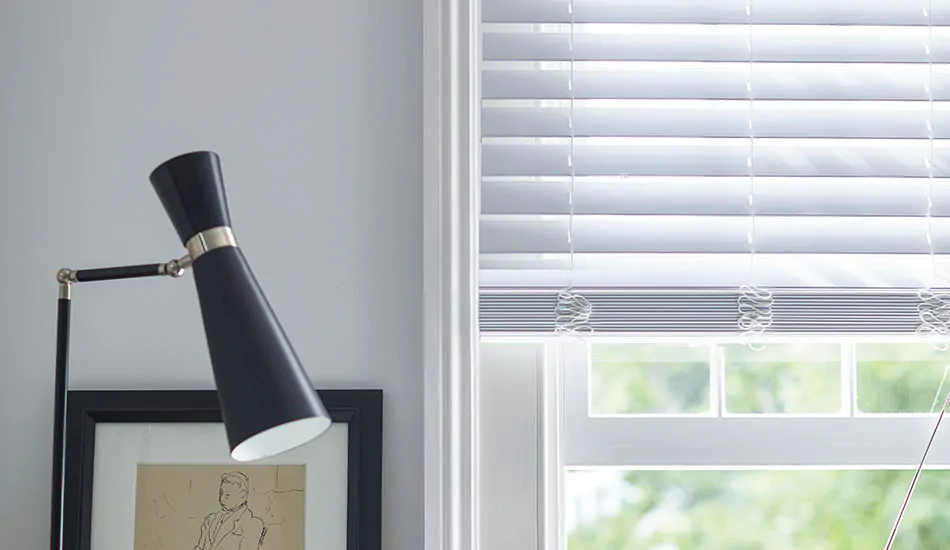
Cordless blinds operate with a tension mechanism that holds the blinds in your desired position, making it easy to close blinds without cords or strings. These are often referred to as push-up or pull-down blinds. To control the tilt of the slats, cordless blinds typically have a wand control.
Learn how to put blinds down or lift them up with a cordless control system as well as how to tilt the slats.
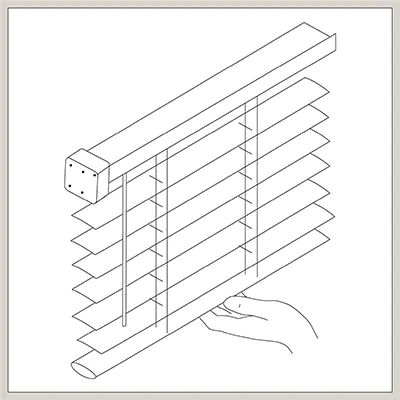
adjusting the height of cordless blinds
Follow these steps to learn how to let blinds down with a cordless control system:
- Step 1: Take hold of the bottom rail of your blinds, being careful not to grab any slats.
- Step 2: Pull the bottom rail down to lower your blinds or gently push up on the bottom rail to raise your blinds. The tension mechanism will hold the blinds in whatever position you set them. This is what keeps blinds from sliding back up after you lower them.
Adjusting the Slats of Cordless Blinds
For cordless blind slat control, simply twist the wand one way or the other to tilt the slats up or down until they reach your desired position. Here are a few tips to get the most out of your wand control:
- Don’t force it: If the wand feels stiff or stops responding, avoid forcing it, as this can damage the tilt mechanism. Check for visible obstructions around the headrail and contact the manufacturer if the issue persists.
- Go gradually: A small turn goes a long way, so adjust slowly until the light feels right for the space.
- Clean regularly: Dust can build up around the tilt mechanism over time, so a gentle wipe-down of the wand and headrail every few months keeps everything turning smoothly.
Why Won’t My Blinds Come Down?
If your cordless blinds won’t come down or feel stuck, the most common cause is a damaged tension mechanism in the headrail. Fixing it will require some disassembly and manual adjustment, so contact your blinds manufacturer for the best advice.
How to Adjust Motorized Blinds
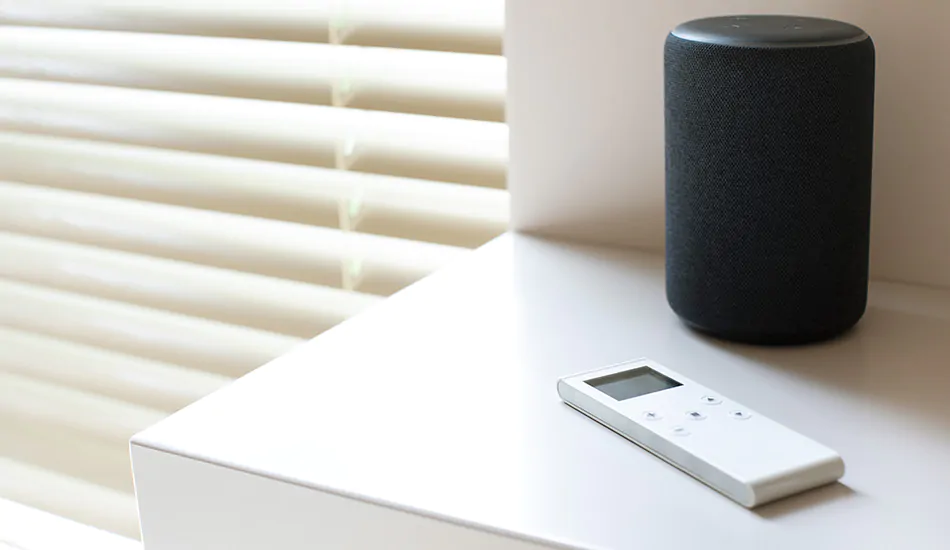
While control types for blinds are relatively easy to use, motorization tops them all, giving you a truly effortless experience. Motorization for blinds from The Shade Store only tilts the slats; you do not have lift control. However, we’re always innovating and hope to feature motorized lift for blinds in the near future.
If you’re looking for motorized lift in particular, many motorized shades, including Roller Shades, Solar Shades, Roman Shades, Woven Wood Shades, and Cellular Shades, can be raised and lowered automatically.
Adjusting the Slats of Motorized Blinds
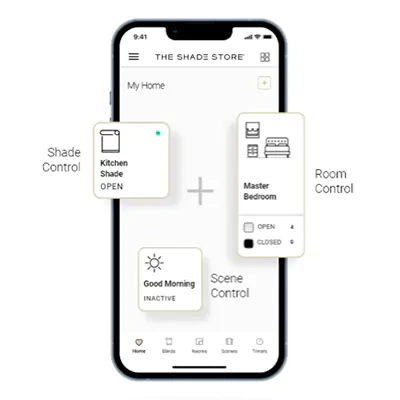
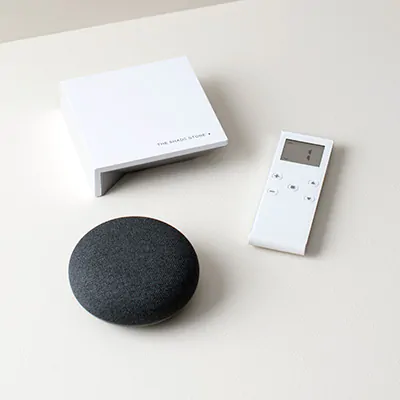
Adjusting the slats of your blinds with motorization will depend on the type of motor you have and the tool paired with your motor. Most motors come with a remote, but some can also be paired with an app on your smartphone or tablet, or even with a home automation system like Amazon Alexa or Google Nest. Pairing your motor with a smart device requires a wireless link to translate the digital signal from your smart device into a radio signal that your motor understands.
To adjust your slats with motorization, follow these steps based on the tool you’re using:
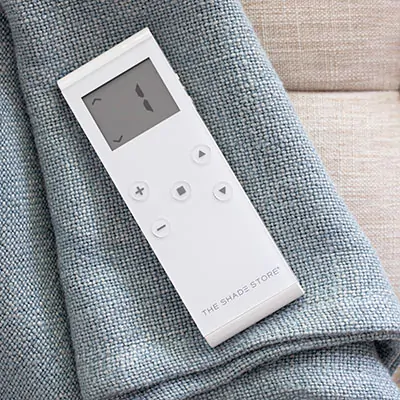
Using a Remote
- Step 1: Walk through the steps provided by the motor manufacturer to program your remote and set your blinds for a particular channel. If you choose motorized blinds from The Shade Store, your remote will be pre-programmed for your blinds, with each blind being set to a particular channel.
- Step 2: Go to the channel that controls the blinds you want to adjust and click the appropriate button to tilt or lift your slats to the desired angle.
Using a Smartphone or Tablet
- Step 1: Download the appropriate app to pair with your motor. This will usually be the app made by your motor manufacturer, such as The Shade Store. Keep in mind, pairing your motor and the app will very likely require a wireless link.
- Step 2: Set up your blinds on the app.
- Step 3: Use the controls in the app to tilt the slats to the desired angle.
Using a Smart Home Device
- Step 1: Follow the instructions provided by your motor manufacturer to pair the motor with your smart home device. This will very often require a wireless link.
- Step 2: Use your voice to control the tilt of the blinds.
Why Won’t My Blinds Come Down?
If your motorized slats won’t tilt, there are several possible causes. First, check your motor’s power source to make sure it’s plugged in properly, or if it is battery-powered, try charging it. If that doesn’t work, try resetting the remote or disconnecting your app or smart home device and then reconnecting it again. If these attempts also fail, it could be a problem with the motor. Contact the motor manufacturer for your next steps, including any steps needed to get your blinds working and lowering again.
How To Close Blinds with Strings
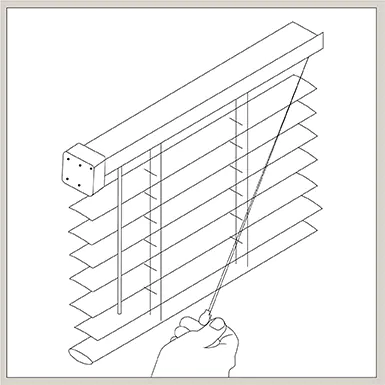
Blinds with strings, or rather, blinds with a cord-lock control system are an older type of blinds with horizontal slats. This control type is no longer offered by The Shade Store, but if you have older blinds, they may have cord-lock control. In a cord-lock system, you’ll generally have two sets of cords: one to control the height of your blinds and the other to control the tilt of the slats.
Adjusting the Height of Blinds with Strings
To learn how to put blinds down or lift them up with a cord-lock, follow these steps:
- Step 1: Grab the cord that controls the height of your blinds and pull it toward the center at an angle.
- Step 2: Pull the cord down slightly to release the lock.
- Step 3: Keep hold of the cord, but release tension on it to allow the blinds to lower and close the window blinds to your preferred position. Or pull the cord down for the blinds to rise.
- Step 4: Once the blinds are in the position you want them to be, move the cord back to its starting point to reset the lock and hold your blinds in place.
Adjusting the Slats of Blinds with Strings
To adjust the slats of your cord-lock blinds, simply pull one end of the cord that controls the tilt until the slats are at the desired position. Pull the other end of the cord to tilt them in the opposite direction.
remember
Cord-lock control is no longer available from The Shade Store due to child safety standards, but the steps above apply if you have existing blinds with this system.
Why Won’t My Blinds Come Down?
If your blinds with a cord-lock system won’t come down, the most common cause is a pinched cord in the headrail. To release it, try applying light pressure to the cord while pulling the cord toward the center of your blinds until it’s parallel to the headrail. If this movement doesn’t release it, it likely requires manual adjustment in the headrail. While you can try this yourself, to ensure your blinds work their best, contact the manufacturer for professional advice.
How to Adjust Vertical Blinds
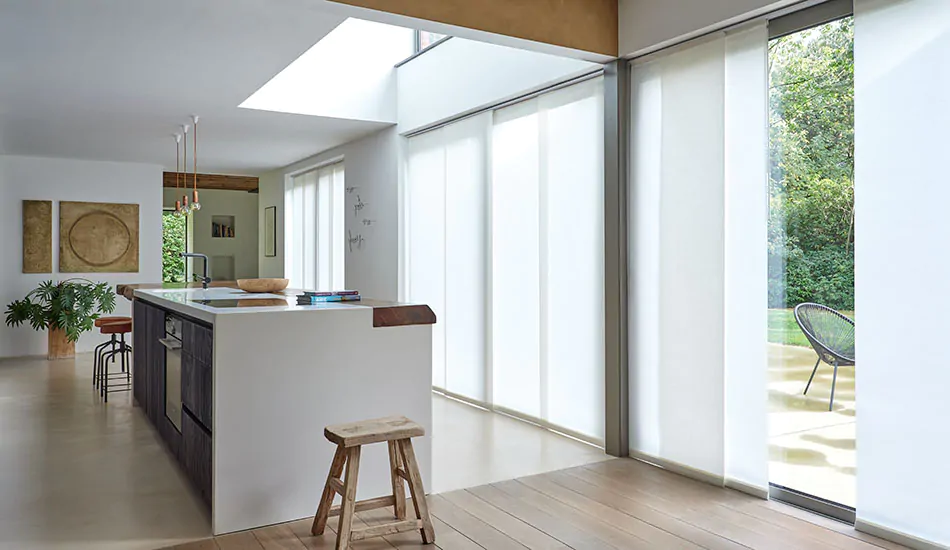
Compared to horizontal blinds, Vertical Blinds have different control types and functionalities. Vertical Blinds are comprosed of vertical panels that slide side-to-side on a track system. These types of blinds have two control types: Cord Draw and Baton.
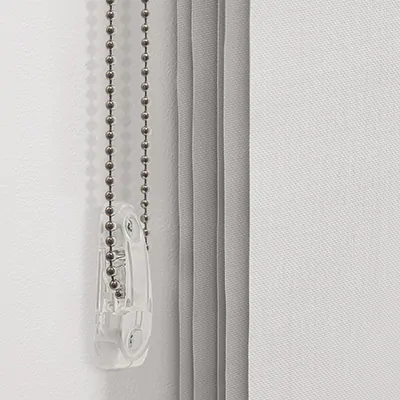
Adjusting Vertical Blinds with a Cord Draw
A cord draw system features a single looped cord that hangs on one side of your blinds and controls how the blinds slide along the track system. To adjust your blinds with a cord draw, it just takes two easy steps:
- Step 1: Grab one side of the looped cord draw and pull to adjust your blinds to open or close them along their track system.
- Step 2: To go in the opposite direction, pull the other side of the looped cord.
Adjusting Vertical Blinds with a Baton
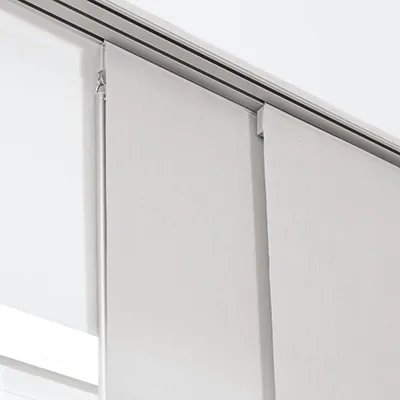
A baton control system features a baton on the leading panel of your Vertical Blinds that allows you to draw your panels open and closed. To adjust your blinds with a baton, it’s also two easy steps:
- Step 1: Grab the baton and pull gently along the track system to open your blinds.
- Step 2: Pull in the opposite direction along the track system to close your blinds.
Why Won’t My Blinds Come Down?
When vertical blinds won’t slide or close properly, the cause is usually tied to the control type. For cord draw systems, check whether the looped cord has tangled or slipped out of the wall tension device. For baton systems, check that the baton is still securely attached to the leading panel. If none of these steps work, contact the manufacturer for professional advice.
How to Choose the Right Control Type for Your Blinds
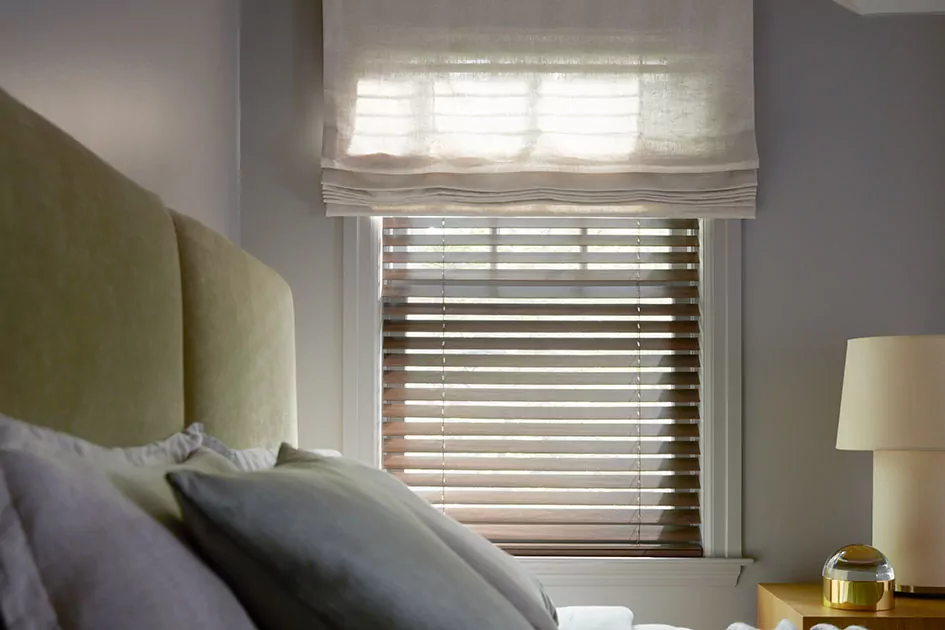
Choosing the right control type comes down to the window, the room, and how the blinds will be used day to day. Here are a few things to consider:
- Cordless blinds are the best all-around option for most homes. They are simple to operate, have a clean look without any hanging cords, and are the safest choice for rooms where children or pets are present.
- Motorized blinds are ideal for windows that are difficult to reach, such as skylights or floor-to-ceiling installations. They are also a great fit for anyone looking to integrate their window treatments into a smart home system, controlling light and privacy with just a voice command or the tap of a button.
- Blinds with strings are no longer available as a new option from The Shade Store, but if existing blinds in a home use a cord-lock system, they can still be operated effectively with the right technique.
- Vertical blinds are best suited for large windows and sliding glass doors where horizontal blinds would be impractical. The cord draw and baton control types make them easy to open and close across wide spans.
Experience All the Ways to Control Your Blinds
With the instructions you need for how to let blinds down or lift them up, you can easily control light and privacy in your home. If your blinds won’t open or close easily, or you’re considering upgrading your blinds, visit a local showroom to experience all your blinds options and how to put blinds down with each different control type. New blinds with the right control system for your needs can elevate your space and give you the easy light and privacy control you deserve.
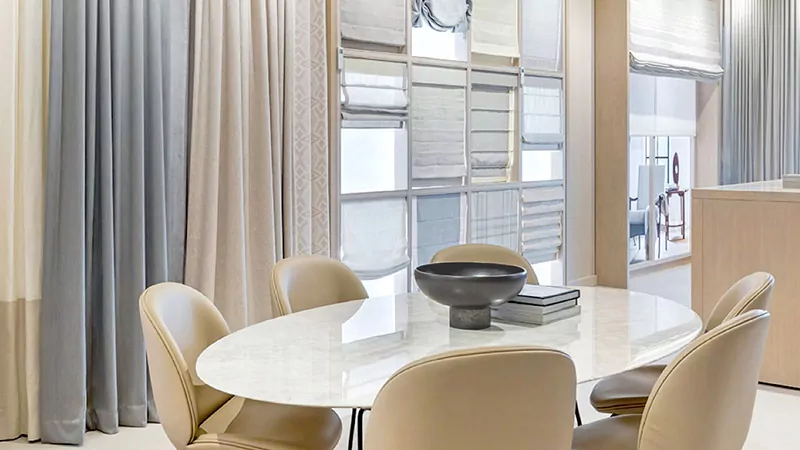
FIND A LOCAL SHOWROOM NEAR YOU
Visit your local showroom for interactive displays of all our products, 1,200+ premium material swatches and helpful Design Consultants ready to assist you.