Find a Showroom
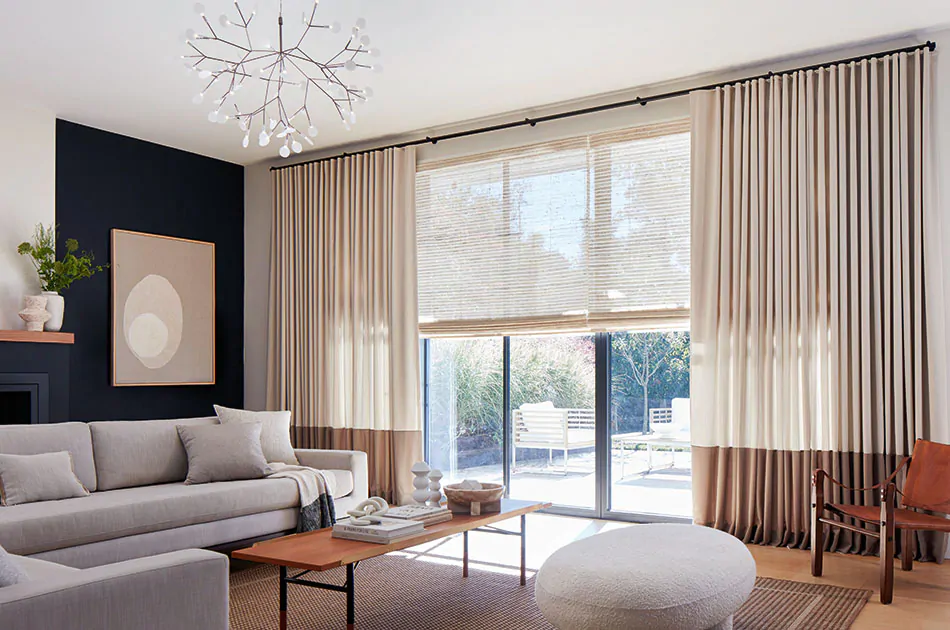
Discover Transitional Window Treatments
If you’re looking for transitional window treatments, you’re likely looking for treatments with a soft, inviting look and feel that balances traditionalism and modernism. Luckily, there are plenty of options for transitional window treatments across shades, blinds and drapery so you can find just the right fit for your preferences and functional needs.
But how do you choose transitional style window treatments? The right window treatments shape privacy, natural light and the finished look of a room. First, learn more about the transitional style, then get tips on how to apply key elements of the style to your window treatments. After that, explore inspirational examples of curated spaces with transitional window treatments to spark your creativity for your own design.
What Is the Transitional Style?
The key defining factor of the transitional aesthetic style is that it combines elements of both traditionalism and modernism for a space that is casual, comforting and refined. Fundamental elements of this style include:
- A neutral, muted color scheme that’s often monochromatic.
- An emphasis on comfort and warmth, both aesthetically as in warm colors and soft textures and functionally as in cushioned furniture and throw blankets.
- Intentionality in your décor so that no one piece seems out of place, but everything blends together cohesively.
- A mix of textures and patterns, with some being subtle and others bold, but no one element overpowers another.
- Balanced feminine and masculine design elements, such as a mix of linear furniture (masculine) with embellished throw pillows (feminine).
Now that you know the main characteristics of the transitional style, you can apply them when choosing your window treatments.
How to Choose Transitional Window Treatments
Before you apply what you’ve learned about the transitional aesthetic, first look at the window itself: its height, width, depth and how much wall space surrounds it. The size and shape of your window will dictate what type of transitional window treatment is ideal for you. For instance, tall, wide windows that are the focal point of your room’s design may best be covered with floor-to-ceiling Drapery that beautifully frames your view with its soft, elegant design. For windows in rooms with eye-catching furnishings like furniture and artwork, choose a clean, simple transitional shade, like a Roller Shade, which won’t compete with the other elements of your design.
Explore more transitional window treatment ideas to spark your creativity.
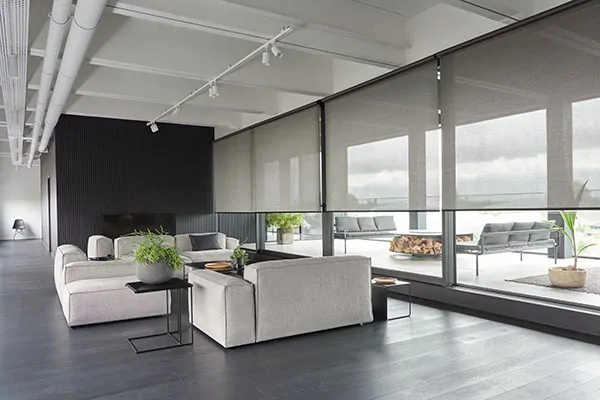
Opt for Neutral Colors
For your transitional window treatments, choose a neutral color, like cool grays or warm tans, that blends into your existing interior design.
Pictured: Solar Shades, 5% Metallic in Zinc
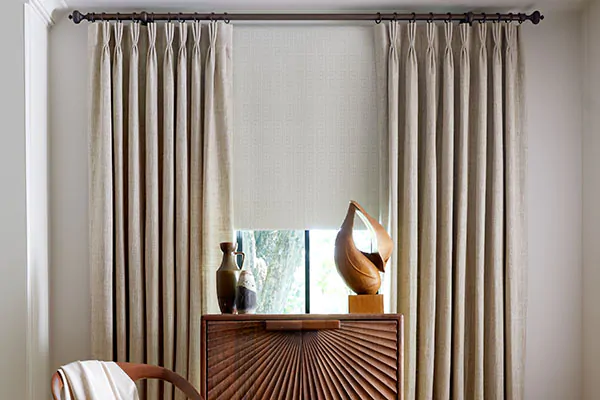
Incorporate Pattern & Texture
To give your windows visual complexity, choose a pattern or texture in a neutral color for a subtle effect or bold colors for a more striking effect.
Pictured: Inner Layer: Roller Shade, Alexa Hampton Corfu in Silver Spoonand Outer Layer: Pinch Pleat Drapery, Shoreline in Reed
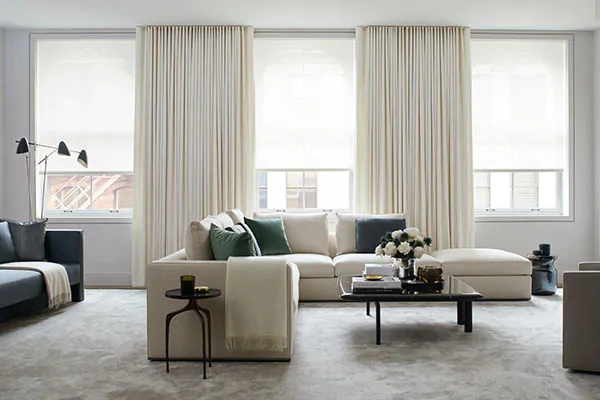
Embrace Warm Natural Light
Transitional window treatments celebrate natural light and a relaxed feel. Choose light filtering window treatments, like Solar Shades, for your inner window treatment layer to embrace the natural light while still maintaining some privacy.
Pictured: Inner Layer: Solar Shades, 10% in Whiteand Outer Layer: Ripple Fold Drapery, Holland & Sherry Wool Flannel in Glacier
Choose Subtle, Yet Sumptuous Details
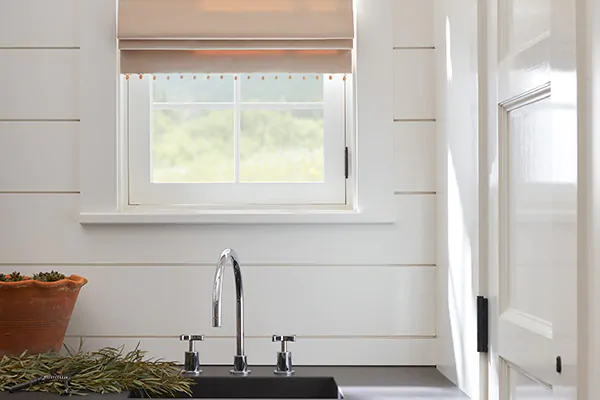
The transitional style is subtle and comforting, but there’s a high level of sophistication in the details. Choose elegant embellishments like tassels, fringe, or tape for your transitional window treatments for a touch of lavishness.
Pictured: Flat Roman Shade, Denim in Sand with Samuel & Sons Seychelles Wood Beads in Sand
Balance Masculine & Feminine Elements
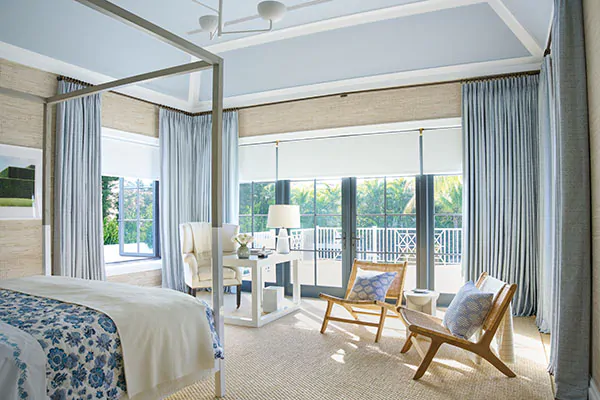
Use your transitional window treatments to bring balance to your existing décor. Add a more feminine touch with elegant Tailored Pleat Drapery in a soft, patterned material, bring a more masculine element with Roller Shades in a solid color, or combine the two for a balanced mix of both.
Pictured: Inner Layer: Roller Shade, Ava in Mist and Outer Layer: Tailored Pleat Drapery, Victoria Hagan Vanda in Sky
Emphasize Comfort & Convenience
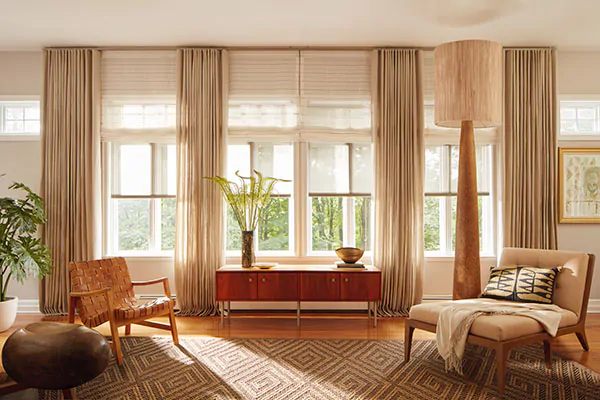
Transitional design champions comfort and ease, all with a refined touch. Bring a sense of lush comfort with window treatments in soft, elegant materials like linen and warm neutral colors. And for the ultimate sense of comfort and convenience, upgrade to motorized window treatments for effortless light and privacy control.
Pictured: Inner Layer: Solar Shades, 3% Thermo in Beige and Middle Layer: Flat Roman Shades, Martyn Lawrence Bullard Sahara Stripe in Desertand Outer Layer: Ripple Fold Drapery, Linen in Natural
Want Transitional Functionality?
In the functional sense, transitional window treatments are those that let you easily transition from day to night. Options for this type of window treatment include Day/Night Cellular Shades, Light Filtering Shades, Double Roller Shades and Blinds, and blackout window treatments for added privacy and light control.
Types of Transitional Window Treatments
Transitional rooms can lean a few different directions, depending on the furniture, the light, and how the space gets used. Choosing between the main product categories often comes down to how you live in the room, not just how it looks. Below are three options that tend to anchor transitional spaces well, along with the kinds of rooms each one suits best.
Transitional Window Shades
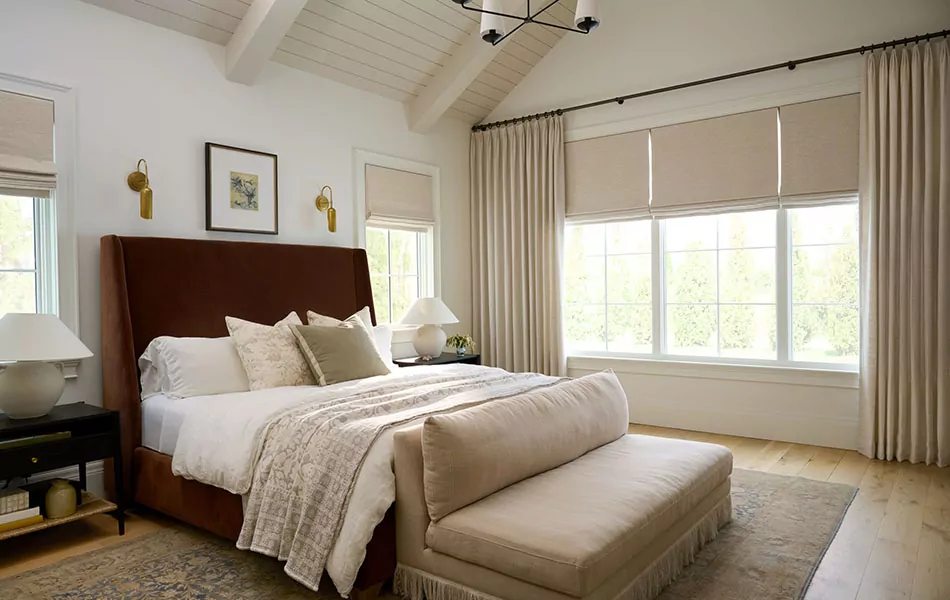
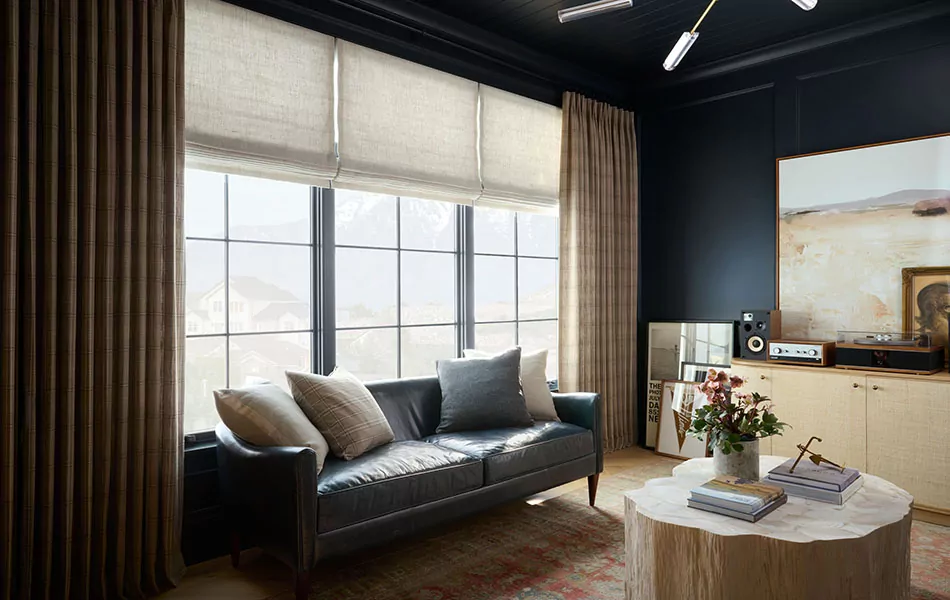
Transitional shades are a versatile option with easy-to-use control types, making them ideal for rooms where you regularly need to adjust your light and privacy, like bedrooms, dining rooms, and living rooms. If you want softness without the floor-length commitment of drapery, Roman Shades are the right window treatment for you. The clean, crisp design of Flat and Cascade Roman Shades holds their shape well when raised and lowered every day. They also come in a wide range of fabrics, including inviting neutrals, subtle textures, and intricate patterns, so you can choose the right look to suit your existing decor.
Transitional Blinds
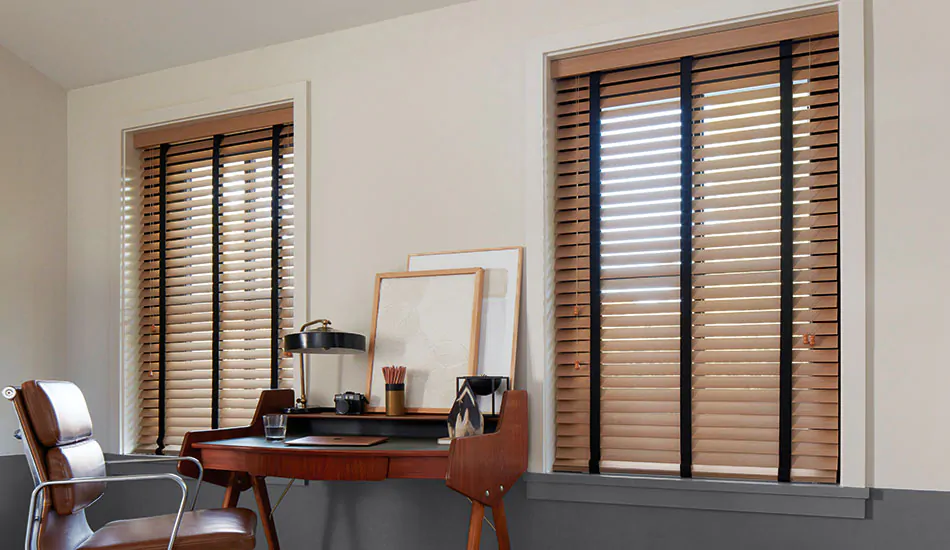
Transitional Blinds are best in rooms where light shifts dramatically through the day. Kitchen blinds with east-facing windows, home offices that get afternoon glare, or any room where you want to let light in at certain hours and block it at others. Their tiltable slats let you adjust your light and privacy without ever fully opening the treatment. They also tolerate frequent handling better than some softer window treatments. Plus, Faux Wood Blinds can tolerate humidity and moisture which makes them a sensible choice for kitchens and bathrooms.
Transitional Drapery
Transitional drapes are a great option when the room itself feels under-dressed. Their understated pleats and folds of fabric bring inviting softness and a finished look to rooms with high ceilings, large walls, hard flooring, or sparse furniture. Drapery is ideal for delivering warmth at scale with its tall panels of fabric. It’s also the strongest choice for rooms where you want to soften acoustics, like open-plan living rooms with hard surfaces, since the fabric absorbs some sound.
Get Inspiration from Transitionally Designed Spaces
Explore curated rooms with transitional window treatments and other transitional elements to draw inspiration for your own interior design.
Warm, Inviting Sitting Room with Feminine & Masculine Elements
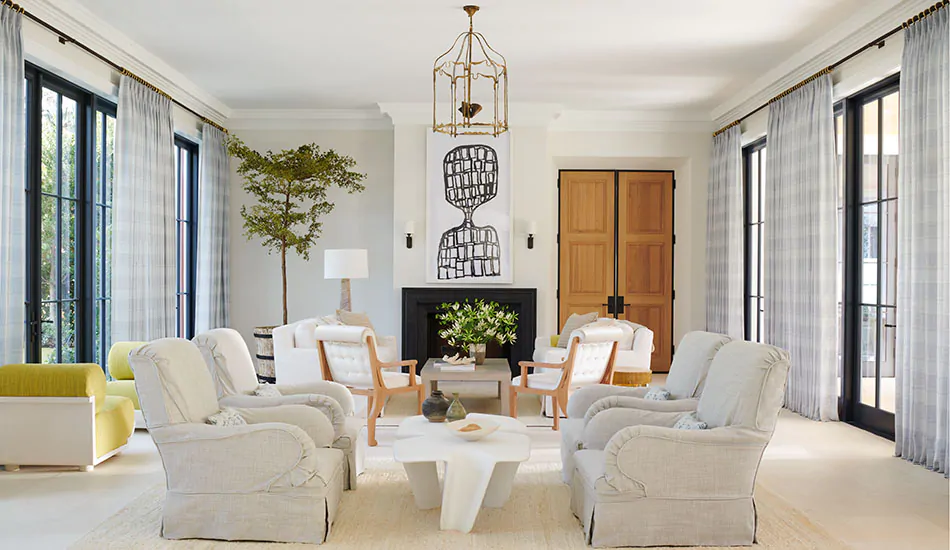
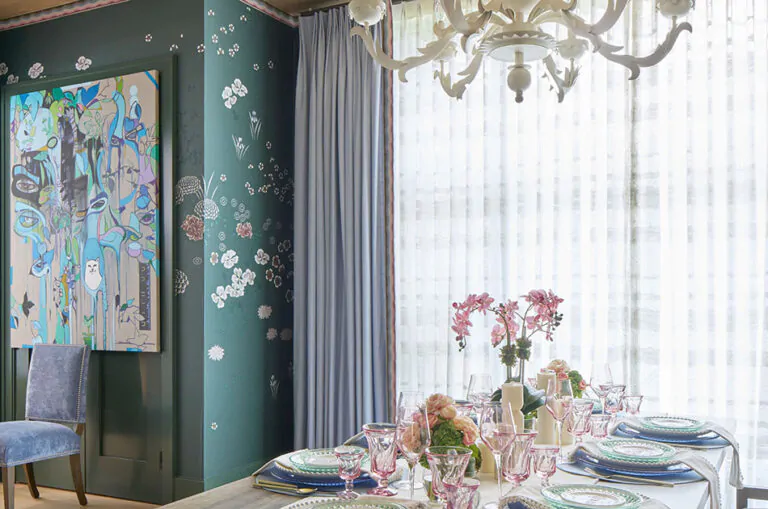
Transitional design champions neutral colors and a harmonious mix of masculine and feminine elements. To embrace this balanced approach, keep your room’s primary color a neutral tone like cream, beige, or gray. Add masculine and feminine elements of color and pattern with furniture, décor and of course, window treatments. Choose soft, feminine drapery with a subtle color and pattern to bring a touch of visual complexity to your space. Pair your feminine drapery with more masculine dark-toned metal drapery hardware and black window frames for balance.
For more visual breaks from your primary neutral color, consider wood framed furniture for a natural element and potted plants for greenery, both of which transcend modern and traditional design. If you’re looking for a bolder, more modern look, add black-and-white artwork. The black-and-white contrast will tie your black window frames and dark drapery hardware together with other light-toned elements in your space for a unified aesthetic.
Soft, Monochromatic Dining Room
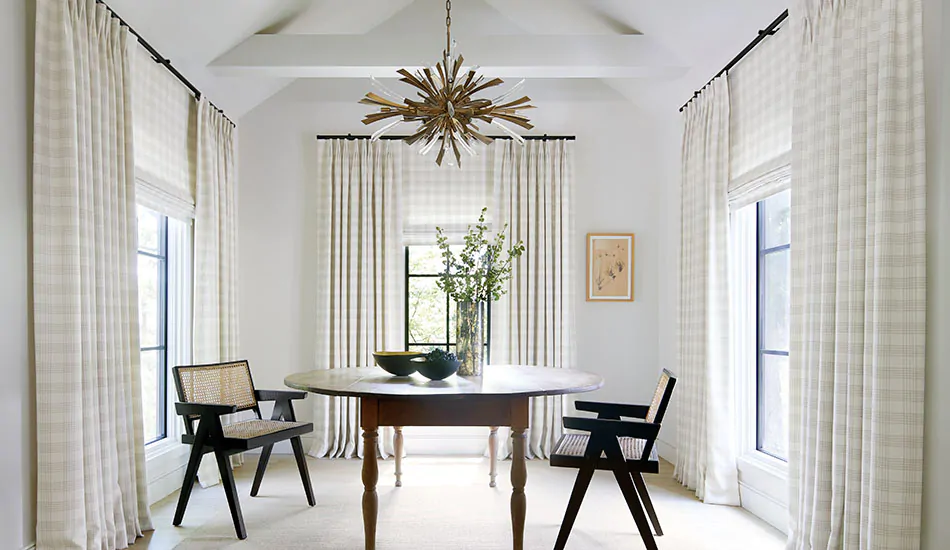
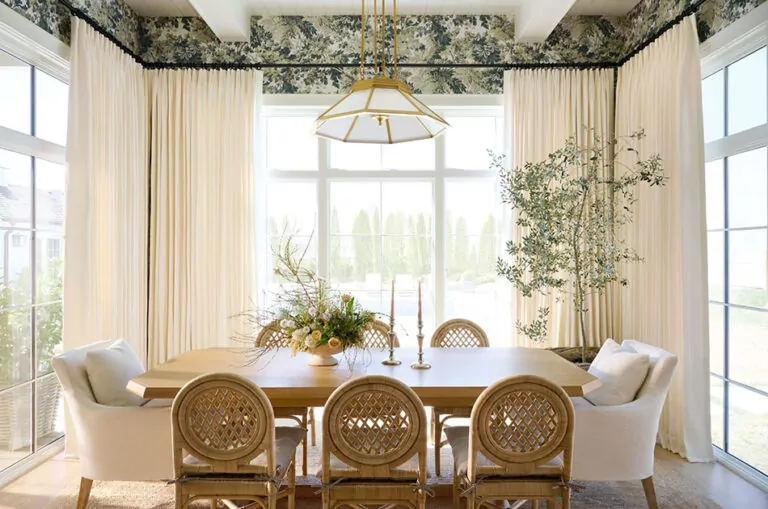
A neutral, monochrome color palette is a typical design choice of transitional homes, but that doesn’t mean these designs are bland or boring. Monochrome color palettes give you the opportunity to capture visual complexity in other ways, such as pattern, texture and a mix of materials. For a monochrome dining room with a bright, warm off-white color palette, break up the color scheme with soft Drapery and Roman Shades in the same traditional, understated plaid pattern. The layered transitional shades and drapery, even in the same color and pattern, give your space a touch of visual depth.
For greater dimension and more texture, choose a dark wood-toned table and matching chairs with woven backings and seats. A modern, statement-making chandelier in a burnished gold color will top off your design, helping to make the space a truly transitional one.
Living Room with Ornate Accents
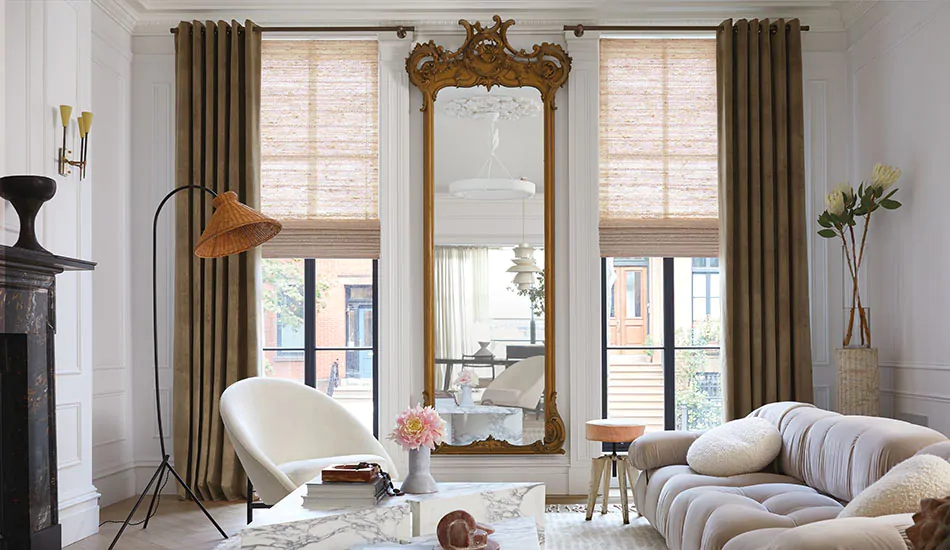
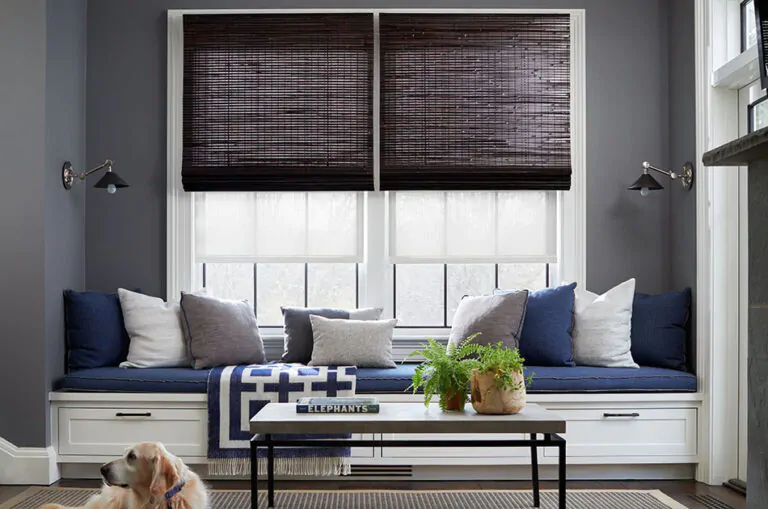
While not an overly luxurious aesthetic style, transitional design still makes room for delicate embellishments to create dimension in the space. For transitional living room window treatments, consider a more lavish material, like velvet, to add a touch of luxe to this popular room in your home. However, opt for a neutral color to keep it from overwhelming other elements in your design. To balance the lush material, layer it with another window treatment made from a more textured, fibrous material like the natural woven fibers of Woven Wood Shades. The combination of soft, lush velvet and coarse, natural fibers creates a balance that’s ideal for transitional window treatments.
For the rest of your living room design, continue to combine both soft and hard textures and materials to maintain that balance, such as soft, curved upholstered furniture with an angular marble coffee table.
Bedroom Sitting Area with Layers
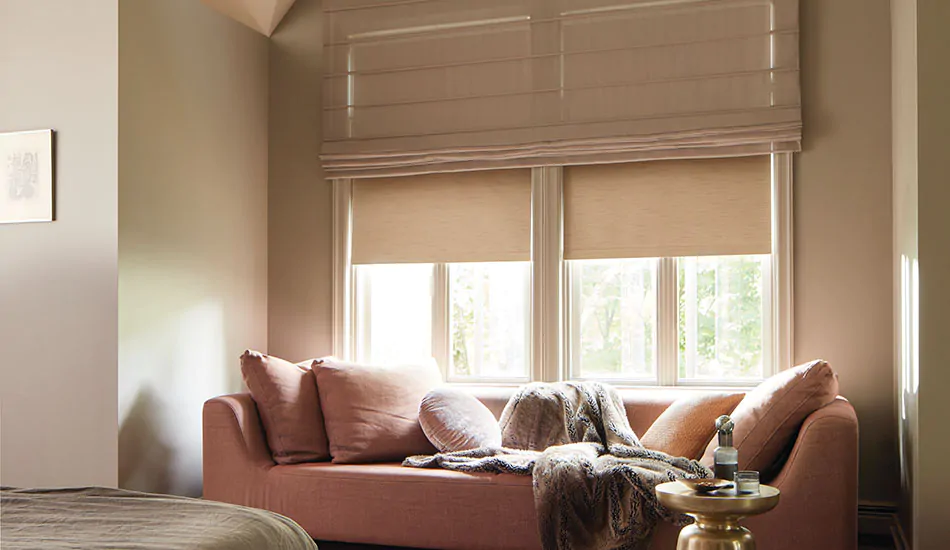
Emphasize comfort in your transitionally styled room with cozy, comfortable furniture and layered throw blankets and pillows. Mix textures with your blankets and shapes with your pillows to create design dimension. Match the cozy, layered design of your furniture with layered window treatments for a cohesive look and feel. Choose soft treatments like Roman Shades with their layered folds and pair them with a hard treatment like Roller Shades with their crisp, clean lines for a balance of feminine and masculine elements. For true comfort and convenience, upgrade your transitional window treatments with motorization, which makes controlling your light and privacy levels a breeze.
Find the Perfect Material for Your Transitional Window Treatments
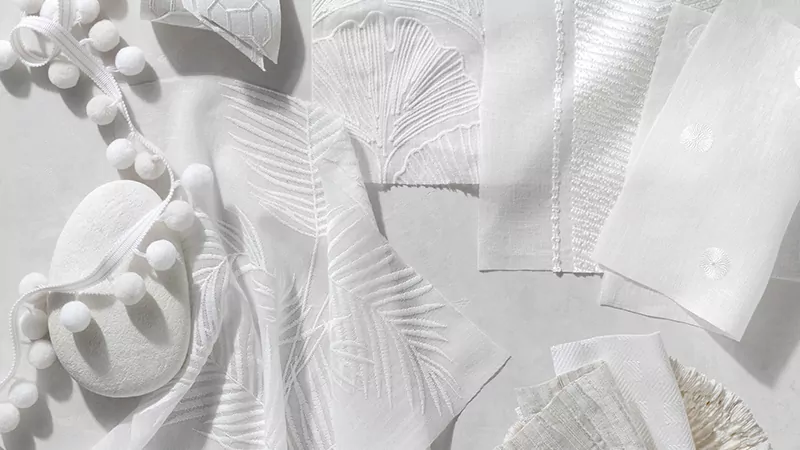
With plenty of insight into transitional window treatments and guidance on how to customize your own design, you’re ready to compare materials, colors, textures and patterns in your own home. Order free swatches and view them in the changing light of your room to choose the right look, opacity, privacy and light control.
For even more inspiration, see how transitional style compares with modern window treatments, review our most popular window treatments for timeless options, or browse trending window treatment ideas to see what’s current in home design.
EXPLORE OUR MOST POPULAR SWATCHES
Not sure where to start your material search? Order our most popular swatches for free to see what’s in style — and maybe find your new favorite.