Find a Showroom
How to Measure for Blinds in 4 Easy Steps
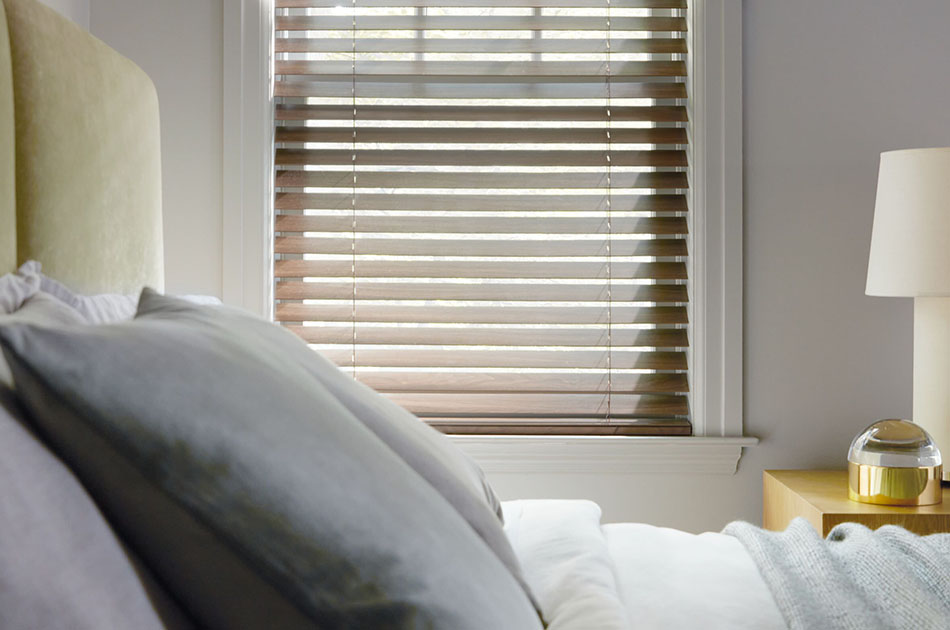
Measuring for blinds means capturing your window’s exact width and height and choosing an inside or outside mount so the fit is precise. Learning how to measure for blinds is essential for a successful project. Proper measurements ensure your blinds or other window treatments fit your window properly, look great and provide the privacy and light control you need. Accurately measuring for blinds is especially important if you plan on ordering custom blinds, which are handcrafted to perfectly fit your window for a tailored, polished look. Measuring correctly can also help you choose the size of premade blinds that best fits your window, although it may not give you a perfect fit.
Learning how to measure your windows for blinds correctly is what makes ordering custom blinds worthwhile, since your window treatments are made to fit your exact measurements rather than forced into a standard size.
Key Takeaways: Measuring for Blinds
- Order custom and we cut to your numbers, so you are never forced into a standard size.
- Measure width and height in three places each, since a window is rarely perfectly square.
- Inside mount needs at least 3/4 inch of depth and gives a clean, built-in look.
- Outside mount hides an uneven opening and can make a window feel taller.
- Write measurements width first, then height (W x H), rounded to the nearest 1/8 inch.
In this article
SCHEDULE A FREE PROFESSIONAL MEASUREMENT
Ensure your window treatments fit perfectly when you schedule a free measurement with our expert professionals.
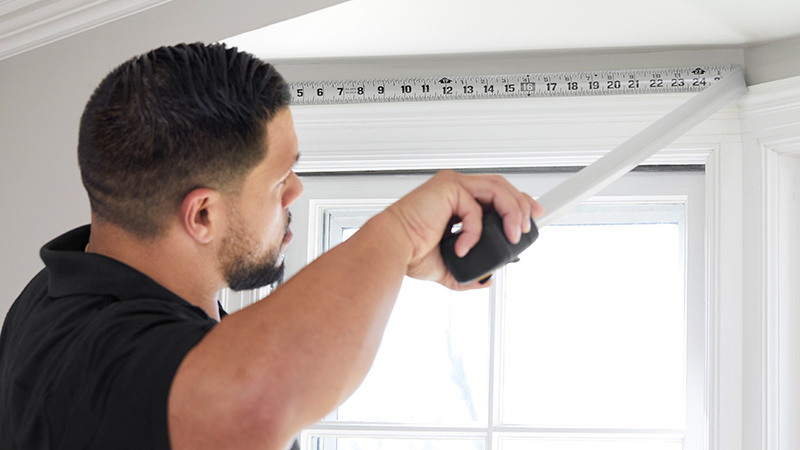
Steps for Measuring for Blinds
Learn how to measure your windows for blinds in four easy steps to ensure your window treatment project is a success.
Keep in mind that these steps are primarily for Wood and Metal Blinds from The Shade Store, however, they’re relatively universal for measuring other blinds as well as many types of shades. Before starting your project, always be sure to consult your chosen window treatment’s measuring instructions from the manufacturer to ensure you take the perfect measurements.
Step 1: Gather Tools
To learn how to measure for blinds, it’s important you have the right tools available to make the job a success.
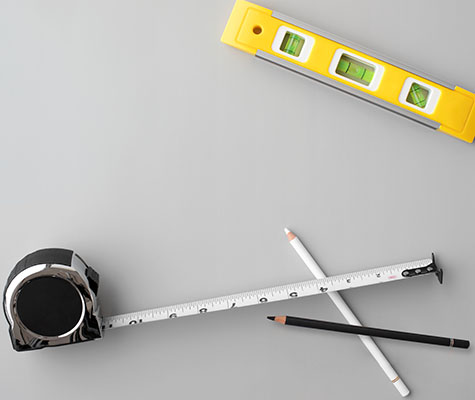
Tools Needed for Measuring for Blinds
- Pencil – Safely mark the length and width of your blinds on your wall, ceiling or window frame.
- Tape measure – Use a metal tape measure for the most accurate measurement, as metal doesn’t stretch over time like plastic.
- Level – Ensure your pencil marks for your blinds’ placement are level and in-plane.
- Stepladder – Make sure your ladder is tall enough for you to easily reach the top of your window.
Step 2: Decide on Headrail Position: Inside or Outside Mount
Your blinds can be mounted in two ways: Inside the window frame, where it will be secured to the inside of the frame, or outside the window frame, where it will be secured to the wall or ceiling above the frame. Mounting position is mostly a matter of preference, however, inside-mount blinds require a certain depth (the space from the edge of your window frame to the window) for a secure mount.
What Is Depth Requirement?
Depth requirement refers to the narrowest your window frame can be, from the glass to the edge of the frame, to allow for a secure inside-mount installation. To measure depth, measure the space at the top of your window frame from the glass to the edge of your window’s interior trim. If the measurement is ¾-inch or larger, you’ll be able to securely inside mount Wood or Metal Blinds from The Shade Store. Different window treatment products from other brands or in our own product offerings may have different requirements, so be sure to check the installation guidelines for your chosen product.
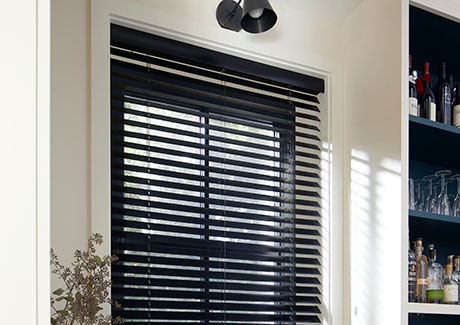
Inside Mount
Inside mount refers to your blinds being installed inside the window frame, typically fastened to the top or “ceiling” of the window frame.
Inside-mount applications require a window depth of at least ¾-inch but will require a little more than 2 inches for a flush inside mount.
Why Choose Inside Mount: Creates a clean, tailored look for your design thanks to the blind fitting securely inside the frame. Plus, you’ll be able to showcase your window frame, which is ideal if they feature detailed woodwork.
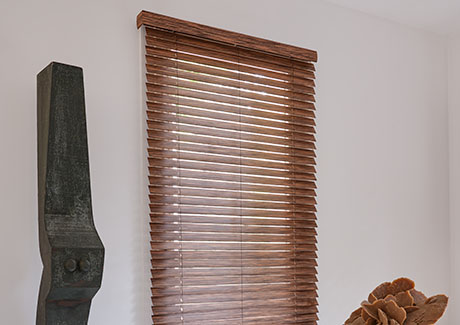
Outside Mount
Outside mount refers to your blinds being installed outside the window frame, typically on the wall or ceiling above your window.
Outside-mount applications don’t have a depth requirement, so they offer more installation flexibility and can be mounted on nearly any window.
Why Choose Outside Mount: When installed a few inches above your window, it creates the illusion of height, which can help your room feel more spacious. It also covers more of your window for fuller coverage and light blocking.
| Feature | Inside Mount | Outside Mount |
|---|---|---|
| Depth needed | At least 3/4 inch | None |
| Look | Clean, built-in, shows off the frame | Covers the opening, adds height |
| Light control | Good, with small side gaps | Best, with 2 to 3 inch overlap |
| Best for | Square frames with nice trim | Shallow, uneven, or out-of-square windows and doors |
Step 3: Measure Blinds for Length
Learn how to measure for blinds length based on your chosen mount type.
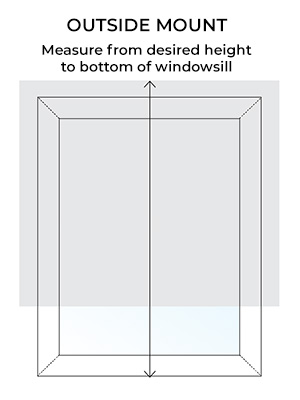
Measuring Length for an Outside Mount
Measuring for blinds length in an outside-mount application will depend on how high above the window you want your blinds to extend. Remember that going higher above your window will create the illusion of height for a more spacious feel. If you’re not sure how high to go, a good rule of thumb is to go two to three inches above your window frame.
Once you know how high you want your blinds to be, measure from that point down to the bottom edge of your windowsill. Round to the nearest 1/8-inch and this will be your ordering length.
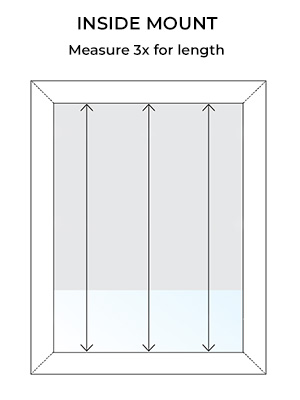
Measuring Length for an Inside Mount
Measuring for blinds length in an inside-mount application requires a few more steps than outside mount. You’ll need to take three measurements for length because no window is completely square, so measuring three times helps ensure your blinds fit correctly.
For length, take measurements in three places:
- At the left side of your window
- In the center of your window
- At the right side of your window
Take the largest number of these three, round to the nearest 1/8-inch, and this will be your ordering length.
Step 4: Measure Blinds for Width
Learn how to measure for blinds width based on your chosen mount type.
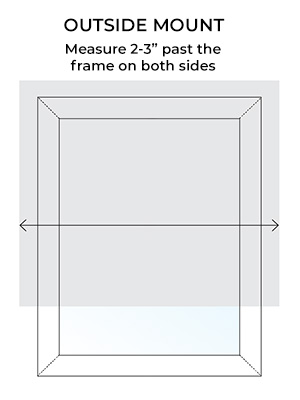
How to Measure Blinds Width: Outside Mount
Measuring for blinds width in an outside-mount installation will depend on how far you want your blinds to extend past the window frame. For the best light control, it’s best to extend your blinds by two to three inches on each side beyond the window trim. This will limit light seepage from the sides.
Once you determine how far past the window frame you want your blinds to extend, measure from one side to the other. Make sure to center your measurement so the extension beyond the frame is equal on both sides. Round to the nearest 1/8-inch and this is your ordering width.
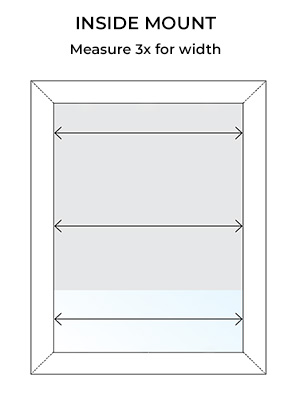
How to Measure Blinds Width: Inside Mount
Measuring for blinds width in an inside-mount application is similar to measuring length. It’s best to take three measurements because no window is completely square.
To measure for width, take measurements across your window in three places:
- At the top of your window
- In the center of your window
- At the bottom of your window
Take the smallest number of these three, round to the nearest 1/8-inch, and this will be your ordering width.
Standard Sizes vs a Custom Fit
Off-the-shelf blinds come in a handful of standard sizes, usually in two-inch width increments up to around 72 inches wide, with either two-inch slats or mini blinds with one-inch slats. A standard size can work in a pinch, but it rarely matches a real window, so you end up trimming slats or living with light gaps down the sides. Custom blinds are built to the measurements you take here, which is why they sit flush in the frame and read as part of the architecture rather than an add-on. If your window falls between standard sizes, or you simply want a tailored look, custom is the more intentional and sophisticated choice.
How to Order Blinds
Now that you know how to measure for blinds, you’re ready to place your order. To order blinds, follow these simple steps. These steps are particular to ordering Wood or Metal Blinds from The Shade Store.
- Step 1: Choose your type of Blinds: Wood Blinds or Metal Blinds.
- Step 2: Choose your material and color.
- Step 3: Select your chosen mount type: inside or outside mount.
- Step 4: Input your product measurements that you calculated above.
- Step 5: Choose your tilt and lift controls (if applicable).
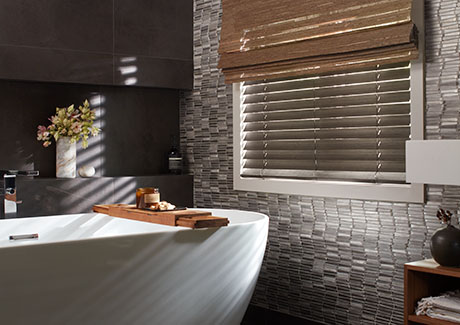
START YOUR ORDER: WOOD BLINDS
Choose your customizations to design the perfect Wood Blinds for your space.
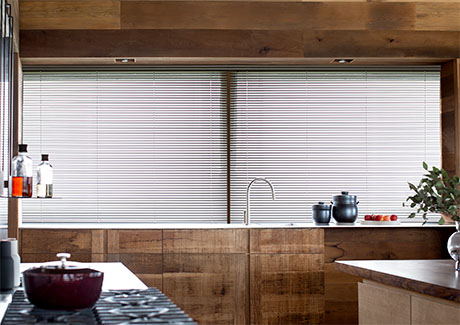
START YOUR ORDER: METAL BLINDS
Choose your customizations to design the perfect Metal Blinds for your space.
Best Practices for Installation
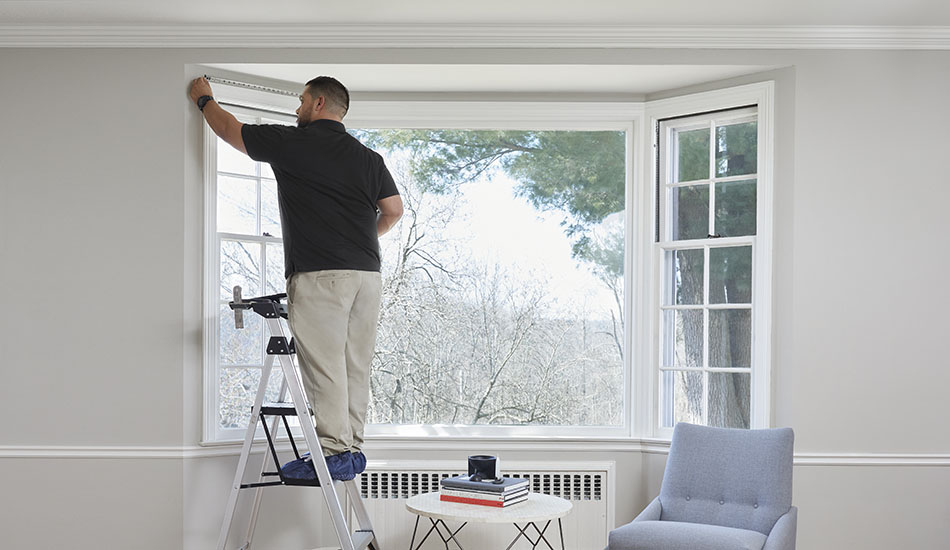
After you place your order, you might be wondering whether or not you can install your blinds yourself. Our Blinds are relatively simple to install but explore these best practices to get a sense for what the process entails.
Always be sure to consult the installation guide for your chosen product before starting your project.
Typically, installation will include the following:
- Step 1: Gather tools. You can use the same tools you used for measuring, as well as the addition of a drill and screwdriver.
- Step 2: Mark bracket placement on your wall, ceiling or window frame based on the measurements you took in the steps above.
- Step 3: Create pilot holes in the appropriate places with your drill.
- Step 4: Fasten the brackets with a screwdriver.
- Step 5: Mount the headrail into the brackets.
Get More Install Insight for Blinds
Learn more of the detailed steps for Blinds installation for a more comprehensive overview. HOW TO INSTALL BLINDS
Get Expert Support
American crafted since 1946, with 140+ showrooms and professional measuring built into the process, The Shade Store takes the risk out of a custom order. When you choose custom blinds from The Shade Store, you can count on our team of professionals for expert measuring and installation. Our measurement services are free and ensure you get a perfect fit for your blinds. We come to your home at your convenience and can even share your measurements directly with your Design Consultant if you’ve already been working with someone. Plus, we can come back for installation (fees apply) to save you the hassle and ensure your Blinds are installed up to our warranty standards. Start your project with a free measurement today.

GET THE GUIDANCE YOU NEED
Schedule a free design consultation with our talented Design Consultants for guidance on product choice, material selection and more.
How to measure for blinds faqs
In what order do you write blind measurements?
Always width first, then height (W x H). Note it clearly on your worksheet so a 24 x 60 order is never read as 60 x 24.
How much smaller should blinds be than the window?
For an inside mount, you do not deduct anything yourself. Record the exact opening and we make the factory deduction, so the blind clears the frame and still covers the glass. For an outside mount, go larger rather than smaller: two to three inches beyond the opening on every side.
How are blinds measured?
You measure blinds width and height a little differently depending on whether the blinds will be installed in an inside or outside mount application. For an inside mount, measure width and height in three places each and take the narrowest width and longest drop. For an outside mount, measure to the full coverage you want.
Should I choose inside mount or outside mount for blinds?
Choose inside mount blinds if you want a clean, built-in look and have enough window depth for a secure installation. Choose outside mount blinds if your window is shallow, uneven or out of square, or if you want more coverage and better light control around the edges.
How do you measure for blackout blinds?
Measure as usual, then favor an outside mount with generous overlap for greater light coverage. Room-darkening treatments only perform when the fabric extends past the opening, so light cannot slip around the edges.
Can I measure for blinds myself, or should I book a professional?
You can absolutely measure yourself with the steps above. For bay windows, very tall windows or a whole-home order where a small error multiplies, our free professional measurement removes the risk.
Do the same steps work for shades?
Mostly, yes. The mount decision and the three-point method for inside mount applications carry over, though depth requirements and fabric deductions differ by product. See our guide to measuring for shades.