Find a Showroom
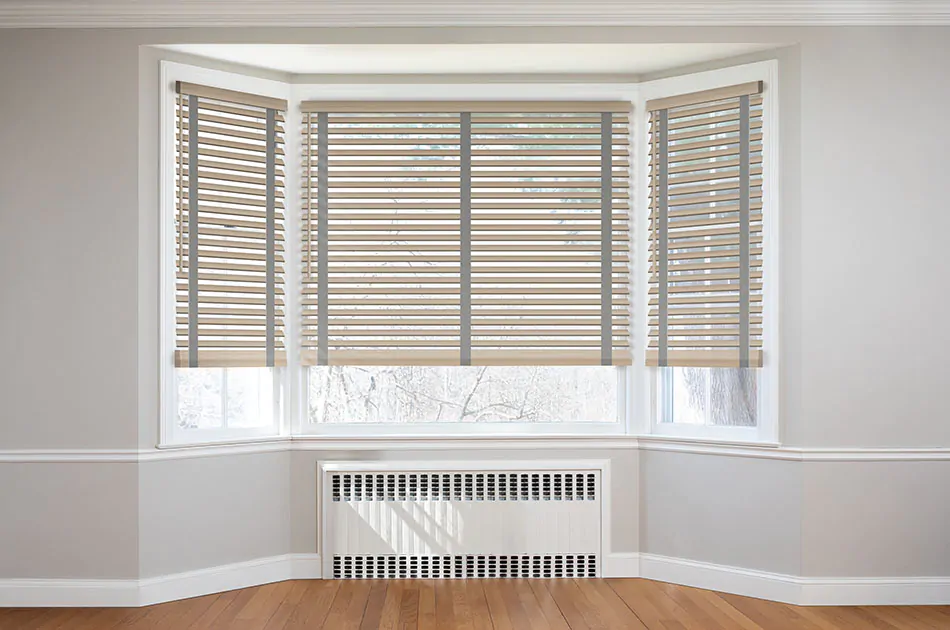
Best Options for Bay Window Blinds & Shades
Your bay window is likely a prized architectural element of your home. It allows lots of natural light to fill your room and creates an inviting feeling of openness. Sometimes, though, you need to filter that light, enjoy a bit of privacy, or both. When it comes to the best blinds for bay windows, your choice of blinds or shades should allow you to control your light and privacy while still showing off the beautiful details of your window.
Before diving into your options for bay window blinds and shades, it’s important to first make a distinction between a “bay” and a “bow” window. The two terms are often used interchangeably, but they have distinct differences.
What Is the Difference Between a Bay & Bow Window?
Bay and bow windows both serve similar functions: They allow a panoramic view of the outdoors and let more natural light into a room. But they do have some key differences:
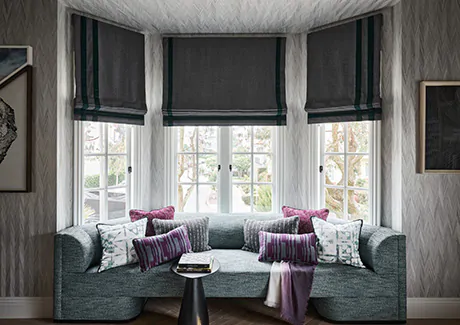
Bay Window
A bay window typically has three angled windows, a larger picture window in the center and two smaller windows angled towards it on either side.
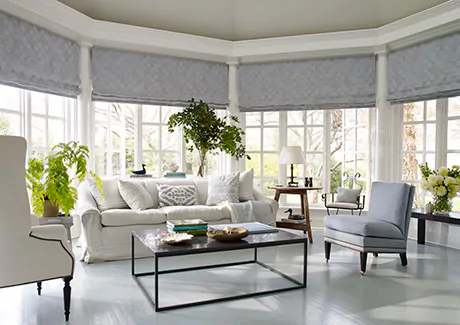
Bow Window
A bow window is typically curved and has four or five windows, all of which are usually the same size.
While the construction of these Bay and Bow windows is different, luckily, the same window treatment options usually work for both. So bay window blinds and shades will often work for bow windows as well.
What are the best blinds for a bay window?
The right choice depends on several factors like the type of room and what you want your window treatments to acheive. For instance, Wood Blinds suit living and dining rooms where you want a sense of warmth for your design and tiltable slats for filtered light. Metal Blinds work better in kitchens and bathrooms since aluminum handles moisture and wipes clean. For bedrooms, Roman Shades with blackout lining or blackout Roller Shades beat slatted blinds, which tend to let some light leak through the slats and at the edges. Cellular Shades are ideal for drafty older homes, where the honeycomb cells trap air and cut heat loss.
Window Treatment Options for Bay Windows
Now that you’re clear on the differences of bay and bow windows — and their ability to use the same window treatments — you’re ready to explore your options for shades and blinds for bay windows.
Wood & Metal Blinds
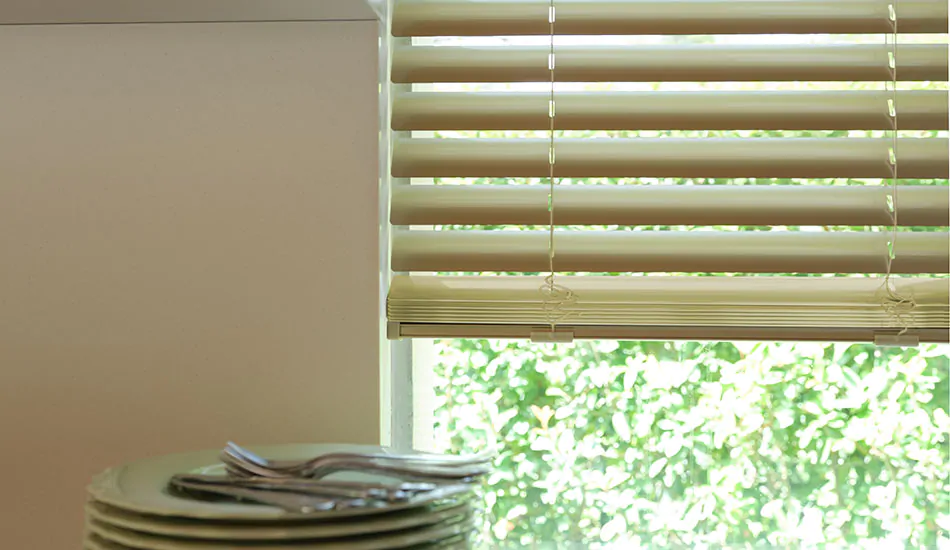
Bay window blinds are a versatile, attractive option for your bay or bow window, as their horizontal linear design helps accentuate the verticality of each window. They also give you a similar look to shutters but offer far greater versatility. Blinds for bay windows are available in two main categories: Wood Blinds or Metal Blinds.
Luckily, no matter which material you choose for your bay window blinds, you’ll still enjoy the same benefits.
Benefits of Wood & Metal Blinds
- Effortless light and privacy control with tiltable slats for everyday use.
- Lots of color and finish options so you can find the perfect look for your space.
- Durable materials give you window treatment options you can count on.
- Can often be inside-mounted (in each window frame) for a more tailored appearance.
Yet, beyond these similar benefits, the two do offer some distinctions when it comes to aesthetics:
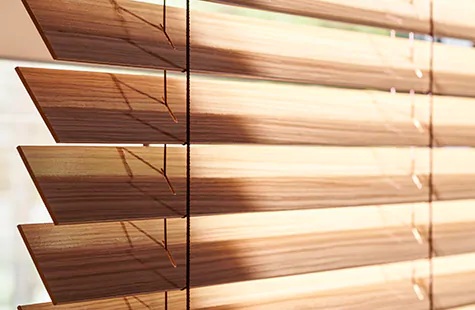
Wood Blinds: Classic Refinement
Wood Blinds deliver a sophisticated, refined aesthetic as your bay window blinds. Choose from colors and finishes ranging from chic painted wood to character-rich exotic hardwoods to get the perfect look. You can also opt for Faux Wood Blinds for bay windows, which give you greater durability and moisture resistance without taking away from the attractive real wood look. Wood blinds for bay windows in kitchens or sunrooms benefit most from faux wood, since the composite resists warping from heat and moisture.
Metal Blinds: Chic & Modern
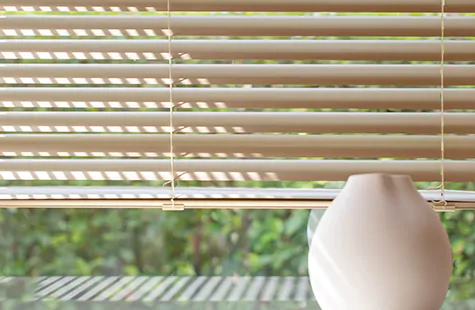
If you prefer a sleeker, more modern look for your bay window blinds, consider Metal Blinds. The metallic sheen of your color choices gives you a more industrial aesthetic that works well for modern and contemporary homes. Plus, the aluminum construction delivers superior performance for long-lasting bay window blinds.
Roller & Solar Shades
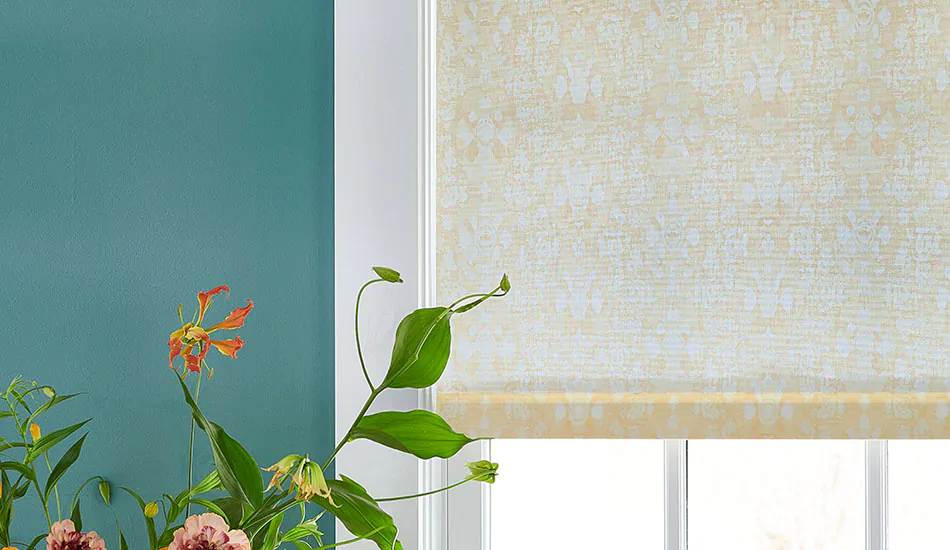
Roller and Solar Shades have very similar designs and functionality. They both work the same way, as they roll up or down around a tube at the top of your window and both provide a sleek, streamlined design for a minimalist appearance. These simple shades are a great choice for bay or bow window treatments as they have clean lines that accentuate each window in these structures.
As alternatives to types of blinds for bay windows, roller and soller shades offer both similar and unique benefits.
Benefits of Roller & Solar Shades
- Easy functionality regardless of control type for easy everyday use.
- Plenty of colors and patterns available so you can find just the right look.
- Lots of design versatility with its sleek, minimalist construction.
- Often made from easy-to-clean materials like polyester and acrylic.
- Easily inside-mounted in each window frame, needing less than an inch to be securely fastened.
Explore more of the unique benefits of these types of shades for bay windows.
Roller Shades for Bay Windows
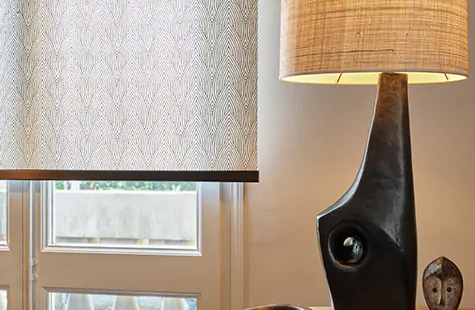
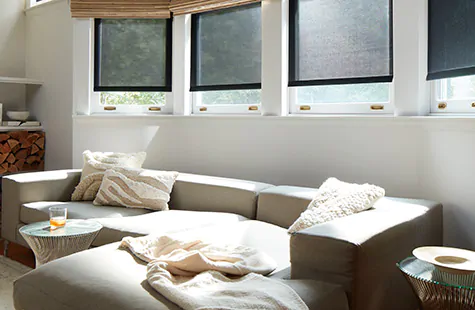
Roller Shades offer lots of options for light and privacy control, coming in both light-filtering and blackout material options. Blackout window shades can be ideal for bedrooms or media rooms that need a room-darkening effect. Light-filtering bay window roller shades, on the other hand, provide just the right amount of privacy while still allowing light to stream through.
Solar Shades for Bay Windows
Solar Shades are made with innovative materials that give them the ability to block UV rays while still allowing light to shine through. Blocking UV rays reduces glare and heat buildup and prevents fading of your furnishings so you can enjoy all the natural light of your bay or bow window without the worry. Solar shades are best suited for south- or west- facing windows that get the most UV exposure.
Roman Shades
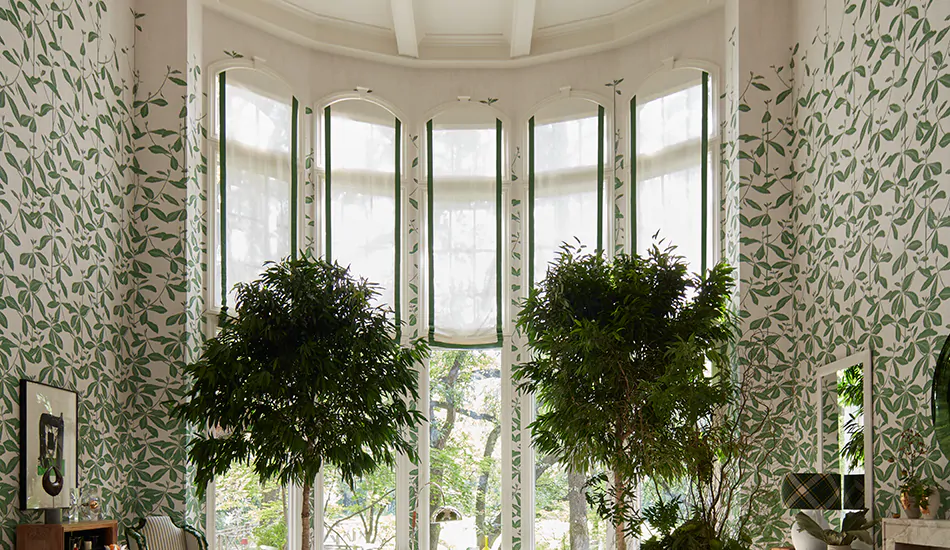
Roman Shades provide a soft, luxurious look for your bay windows with their elegant folds of fabric. Roman Shades come in several different styles ranging from modern, highly functional styles like Flat and Cascade Roman Shades to more decorative types like Relaxed and Tulip Roman Shades. Choosing the right style will depend on how you want your bay windows to function and look. Among window treatments for bay windows, Roman Shades are a versatile choice that blends the softness of drapery with the clean, simple look and easy functionality of shades. .
Because functional and decorative Roman Shade styles serve different purposes, it helps to compare the benefits of each.
Benefits of Functional Roman Shades
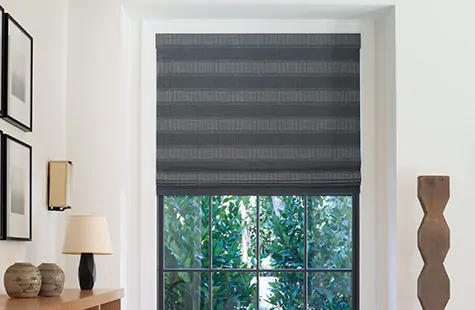
Functional Roman Shade styles include Flat, Cascade, Aventura, and Pleated Roman Shades. These styles are easy to open and close on a daily basis, so you can let in the sunshine from your bay window during the day and enjoy the solitude of privacy in the evening.
Other benefits include:
- Design versatility among the four functional Roman Shade options, from sleek, modern Flat and Cascade Roman Shades to the Japanese Shoji-inspired design of Aventura Roman Shades and the lush look of Pleated Roman Shades.
- Lots of color, texture, and pattern options so you can find the right look for your space.
- Blackout and privacy lining to provide better privacy and room darkening when you need it, as well as give greater stability and crispness to the folds of your shades.
- The softness of drapery with greater functionality, which is especially useful for windows where drapery may not be the best option (like some types of bay and bow windows).
Benefits of Decorative Roman Shades
Decorative Roman Shade styles include Relaxed Roman Shades and Tulip Roman Shades. These styles offer beautiful designs with elegant, draping folds, but aren’t ideal for everyday use because they require dressing (adjusting the pleats) every time they’re opened or closed.
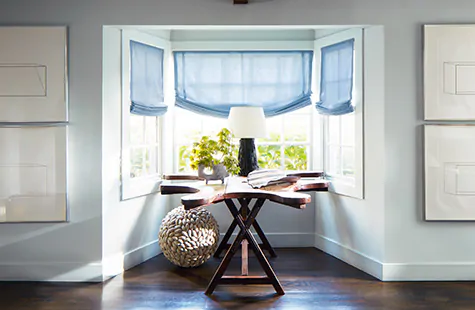
These types of shades do have clear benefits, even if they’re not ideal for everyday use:
- Beautiful designs that add character-rich style to your bay windows that can truly transform a room.
- Great for layering with other bay window blinds or shades that can add more functionality to your windows such as Roller Shades.
Woven Wood Shades
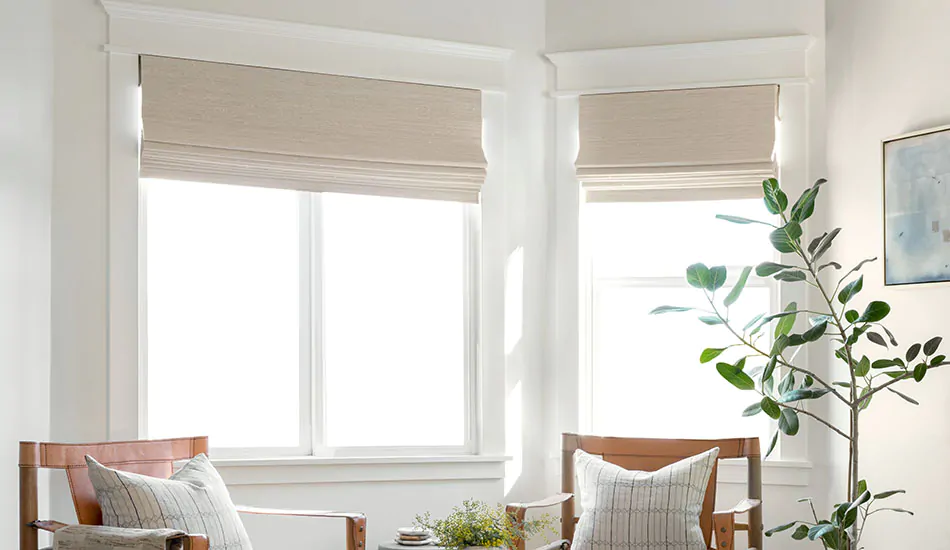
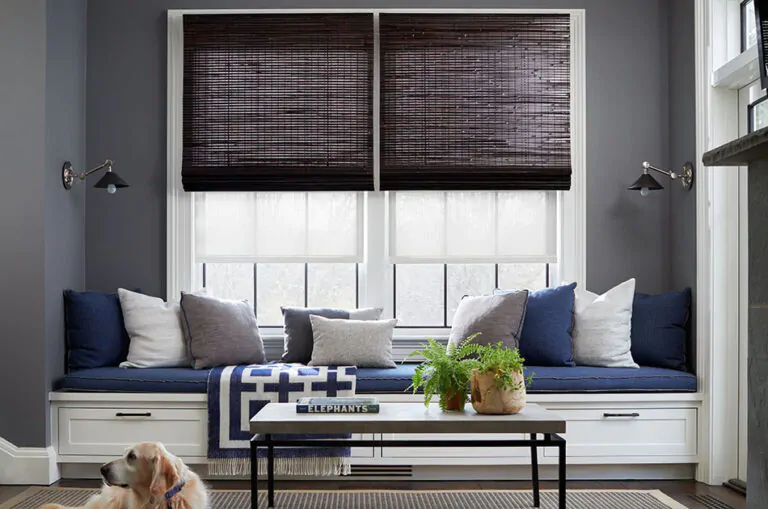
Woven Wood Shades are a unique option beyond blinds for bay windows. These types of shades are made from eco-friendly natural fibers like bamboo, grasses and reeds and bring a bohemian, organic look and feel to your bay or bow windows.
Woven Wood Shades come in styles that resemble Roman Shades as well as those that resemble Roller Shades. All Woven Wood Shades are highly functional — as well as beautiful and organic — and offer several benefits.
Benefits of Woven Wood Shades
- Easy functionality regardless of control type for easy everyday use.
- Add a natural, organic look and feel to your bay windows with their fibrous texture.
- Softens the light and gives your room a warm glow thanks to its open weave that disperses direct sunlight.
- Features blackout and privacy lining options to further block light and give you greater privacy and a room-darkening effect, ideal for bedrooms.
Cellular Shades
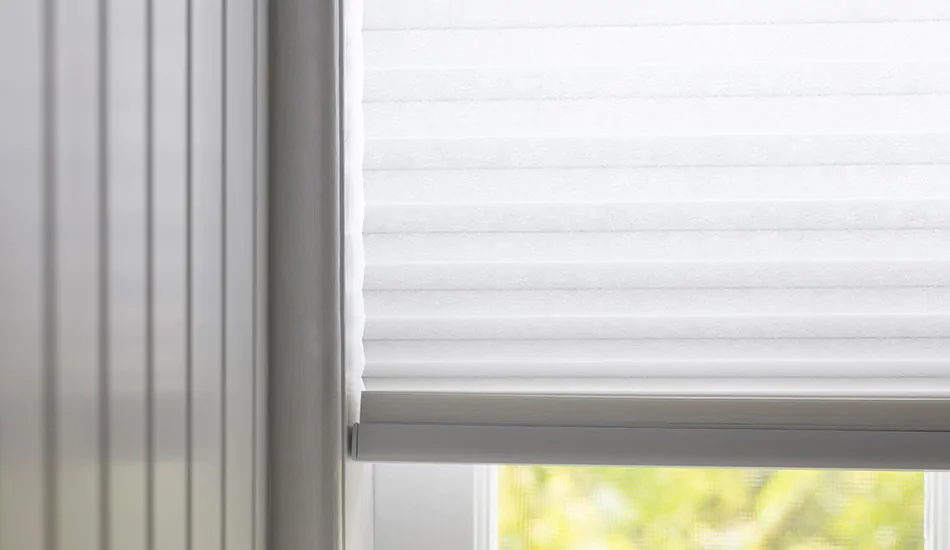
Cellular Shades are a highly functional and chic option for your bay window blinds. These types of shades feature a unique honeycomb design that allows them to insulate your room by trapping hot and cold air in its cells. The result is more regulated interior temperatures that may even help you save on your utility bill. Among the best bay window blinds options for energy efficiency, cellular styles are hard to beat. These types of shades can be ideal for bay or bow windows in older homes that may let in a bit of a draft.
Beyond their ability to insulate your home, Cellular Shades offer several other benefits beyond blinds for bay windows.
Benefits of Cellular Shades
- Easy functionality regardless of control type for easy everyday use.
- Lots of color and pattern options so you can find the right look for your space.
- Sleek minimalist design means these shades fit in with all types of styles.
- Blackout and light-filtering options are available so you can achieve the right level of light and privacy control.
- Easily inside-mounted thanks to their compact design, which can fit in narrow windows, giving you a streamlined, tailored aesthetic.
Vertical Blinds
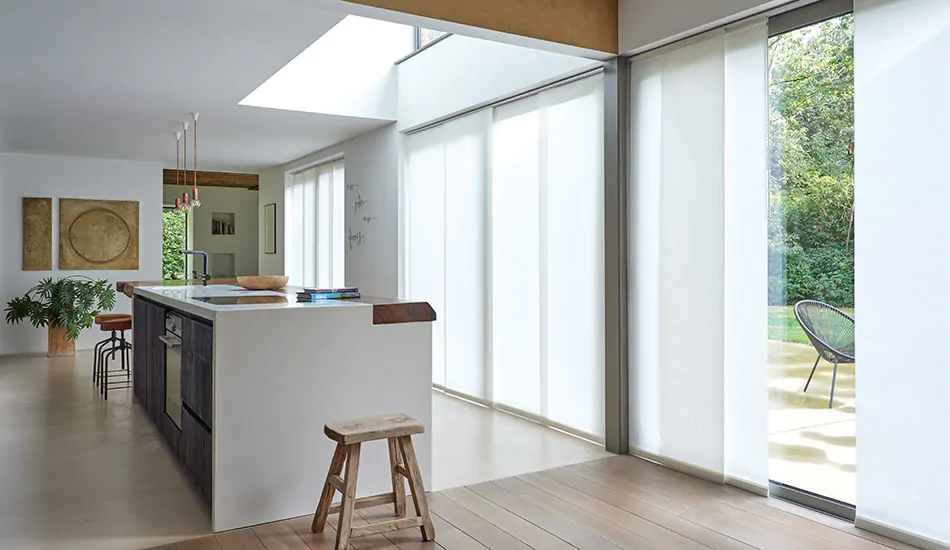
Vertical Blinds are made of panels of material that run on a track system for easy functionality. To use them as bay window blinds, you can choose a panel track system design especially for bay windows, which features a center section and two side sections installed at a 135-degree angle to the center. This setup fits most bay window applications. For bow windows, Vertical Blinds are not an ideal choice, as they do not work well on curved structures due to their design.
Vertical Blinds offer a unique solution as bay window blinds with several benefits.
Benefits of Vertical Blinds
- Easy functionality thanks to their simple track system design that allows you to move all panels at once or single panels as needed to cover just the area you want.
- A sleek, modern aesthetic thanks to their clean, simple lines that can suit a wide range of aesthetic styles.
- Lots of material options featuring a range of colors, textures, and patterns so you can find the perfect look for your space.
- Light-filtering materials from sheers that soften natural light to more opaque materials that provide more privacy and light control.
- Ideally ceiling- or wall-mounted above your bay windows to allow for unhindered control from one side of the track system to another.
Now that you know your options for bay window blinds and shades, you’re likely wondering how to measure these unique windows when ordering your window treatments? Luckily, it’s easier than it looks.
How to Measure for Bay Window Blinds & Shades
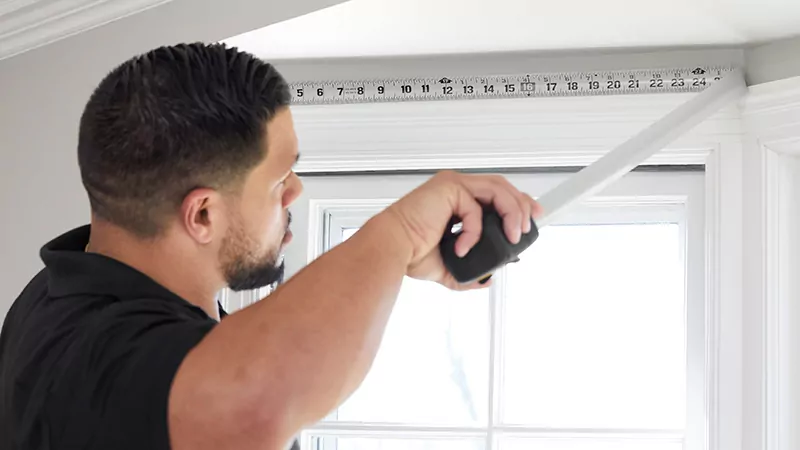
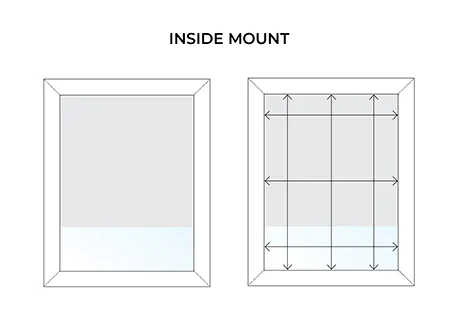
How you measure for your bay window blinds and shades will vary a bit based on the type of window treatment you choose as well as whether you choose to inside- or outside-mount your blinds or shades. Inside mount refers to your shades or blinds for bay windows being installed inside each window frame for a chic, tailored look. Outside mount refers to the blinds or shades being installed outside of each frame, typically on the wall or ceiling of your bay or bow window.
Measuring for Inside-Mount Blinds or Shades
- First, measure each window’s depth, which is the space from the edge of the frame to the window, to make sure there’s enough room to inside-mount your blinds or shades. If the measurement is ¾ inch or larger, you’ll likely be able to inside-mount your blinds or shades.
- Measure the width in three places: top, middle, and bottom. Then round all to the nearest 1/8” and take the smallest number for your ordering width.
- Measure the length in three places: left, center, and right. Then round all to the nearest 1/8” and take the largest number for your ordering length.
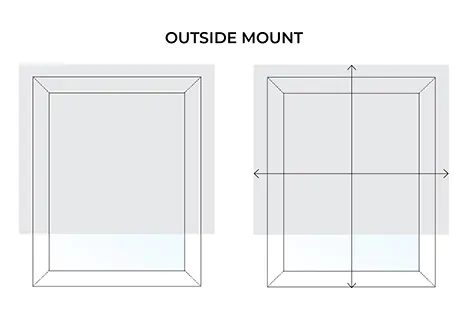
Measuring for Outside-Mount Blinds or Shades
For an outside-mount, you can skip measuring for depth because your blinds or shades won’t need to fit in the window frame. Therefore, you’ll just need to measure for width and length:
- Measure the width of the area you wish to cover with one shade or set of blinds. This will likely be from angle to angle in a bay window and from window frame to window frame in a bow window.
- Measure the height of the area you wish to cover, starting as high above your window as you want and measuring to the bottom of the frame. The length should be the same across all sets of blinds and shades for consistency.
Layering Shades & Drapery
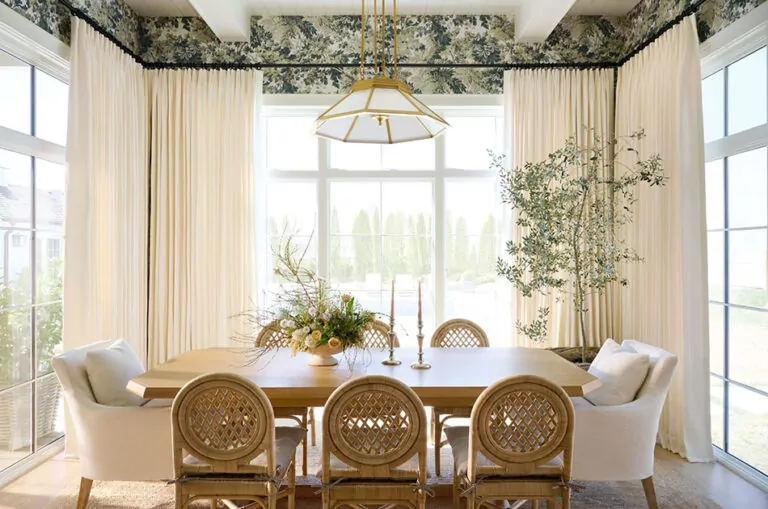
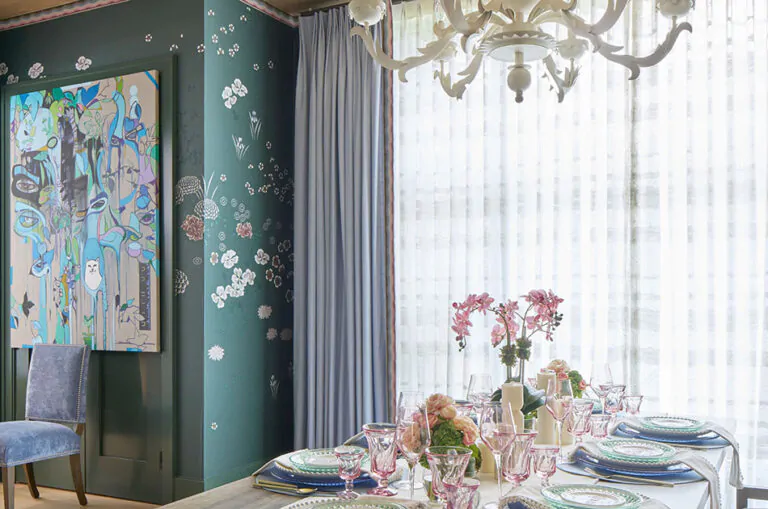
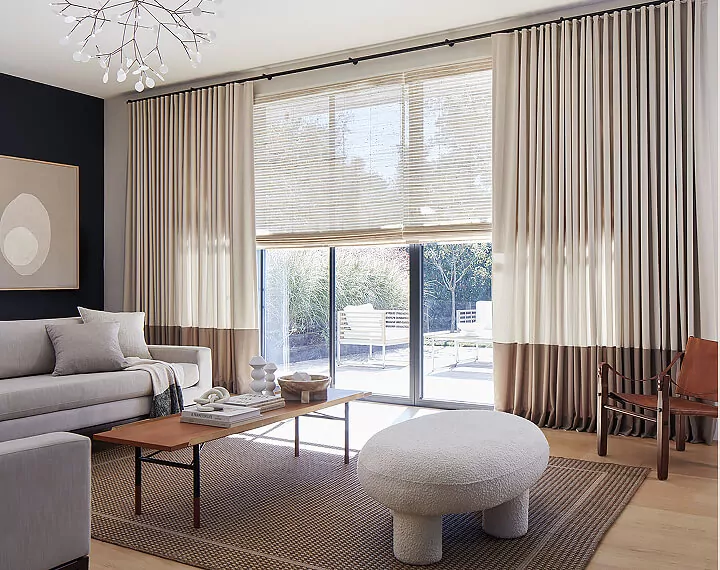
If you’re considering layering two windows treatments on your bay windows, shades and drapery can make a good combination. The shape of these windows welcomes softness around the edges, and crisp, tailored lines in the frames. Layering an inside-mounted shade with drapery panels on either side of each window creates a beautiful cohesive aesthetic that makes the bay window read as one feature rather than three separate windows. Layering in this way works best when your shades are inside mounted while your drapery hardware is installed above the frames.
Benefits of Layering Shades & Drapery
- Two functions in one window, with shades handling daily light and privacy and drapery softening the look of your bay window.
- Visual height and fullness thanks to floor-length panels that draw the eye up and make your window feel taller.
- Better insulation as the drapery panels help block drafts at the edges of your windows that inside-mount shades might let though.
- A unified look that ties the multiple windows of your bay together rather than them feeling disconnected.
- Versatile styling with the hundreds of colors and patterns to choose across drapery and shade materials.
Get Started on Your Blinds for Bay Windows Project
With the insight you need into your bay window blinds and shades options as well as best practices for measuring, you now have the groundwork to begin your window treatment project. If you’d rather take the guesswork out of measuring for shades or blinds for bay windows, you can rely on our team of professionals who offer complimentary measurements. Our specialists can also help you find bay window blinds solutions that actually fit the angles and depth of your frames. Contact us today to schedule your free measurement and get your project started on the right foot.
SCHEDULE A FREE PROFESSIONAL MEASUREMENT
Ensure your window treatments fit perfectly when you schedule a free measurement with our expert professionals.